 EN
EN  PT_BR
PT_BR 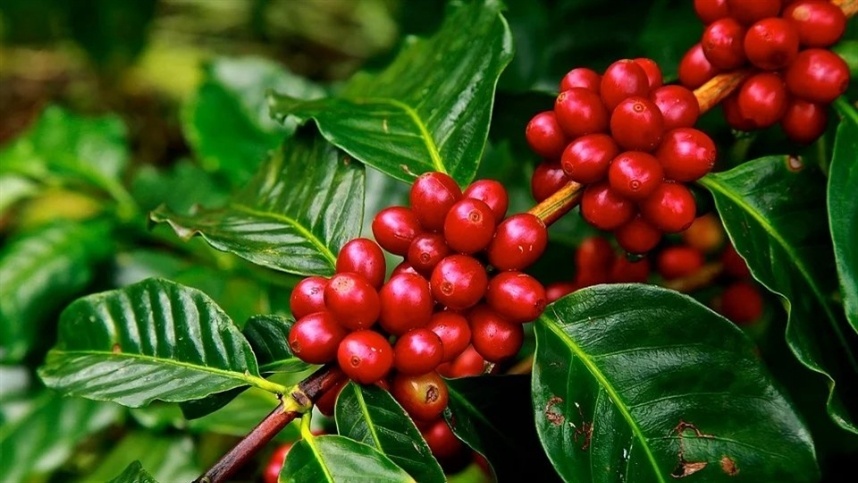
The coffee berry borer requires constant monitoring during flowering, fruiting, and fruit ripening. Between September and June, the presence of fruits at different stages favors the development of the pest, which can reduce the weight of the beans, increase fruit drop, and compromise the quality of the beverage.
In the main producing regions, such as parts of Bahia, Espírito Santo, Minas Gerais, Rondônia, and São Paulo, monitoring infestation should consider the stage of fruit development, climatic conditions, and the history of each plot. According to data released by the technical references presented in the content, early identification is fundamental to determining the timing of intervention.
The coffee berry borer (Hypothenemus hampei) is a small, dark beetle, about 1.5 to 2.0 millimeters long, that bores into the fruit and develops inside. The adult female creates galleries and lays eggs. After hatching, the larvae consume the endosperm, the part that will give rise to the processed coffee bean. According to data released by the technical references presented in the content, the attack begins to gain importance from the fruit filling stage, when they go through the "small, unripe" to canary-green stages.
The female typically bores into the fruit near the shoulder or in the area where fruits meet. Egg, larvae, and pupae develop inside the fruit, making control by contact alone difficult. With the emergence of new adults, the infestation can spread to other fruits, especially during warm and humid periods.
From the end of winter to the following autumn, the coffee plant goes through different phases, from flowering and the formation of small fruits to the filling of the beans and maturation. In plantations with staggered flowering or irrigated areas, fruits at different stages may remain simultaneously on the plants. This scenario favors the persistence of the coffee berry borer in the plot. Fruits remaining after harvest also deserve attention. They can serve as shelter and an initial source of infestation for the following crop. Therefore, leaving infested fruits on the plant or on the ground can contribute to maintaining the pest population from one cycle to another.
Coffee berry borer infestation reduces bean mass because the larvae feed on the endosperm. This can compromise effective productivity per hectare. Heavily infested fruits may also fall before harvest, increasing the need for sweeping and raising operational costs. Another impact is on quality. Infested fruits can exhibit undesirable fermentation, generate sensory defects, and devalue the batch.
An increase in damaged fruit can also raise the defect rate in the official classification, potentially leading to a downgrade in both type and sales value.
Monitoring should combine visual inspection of the fruit, systematic sampling and, when indicated, traps with alcohol attractant to monitor the adult population. The crop should be divided into relatively homogeneous plots, considering age, cultivar, cultivation system and infestation history.
Sampling points need to be distributed in a zigzag pattern, including borders and the interior of the plot. Maintaining the same criteria throughout the growing season allows for monitoring the evolution of the infestation. On each plant, productive branches at different heights should be observed. Healthy and infested fruits should be counted separately. The objective is to estimate the percentage of infested fruits per plant or plot and monitor its evolution over time.
Fruits with internal defects typically have a small, dark, circular hole in the peel. The perforation usually appears near the shoulder of the fruit or between fruits that are touching. In more developed fruits, the presence of dark sawdust at the opening may indicate internal activity.
It is necessary to differentiate these signs from mechanical damage or damage caused by other pests. When in doubt, some suspected fruits can be opened to check for the presence of galleries, larvae, or adults.
Traps with an alcoholic attractant, using mixtures of ethanol and methanol according to proportions defined in research, can complement fruit inspection. The traps should be distributed in the plot at a height compatible with the canopy of the coffee plants. Periodic counting of captured borers allows comparison of adult dynamics with the infestation observed in the fruits. This resource does not replace fruit sampling, but it can help in identifying periods of greater activity and risk of attack.
Between September and November, during flowering and fruit set, the producer should begin inspections and check for the presence of any remaining fruit damaged by fruit borers from the previous cycle.
During the fruiting season, between December and March, monitoring needs to be intensified. In areas with a history of high infestation, assessments may be weekly or bi-weekly.
Between April and June, during the ripening and pre-harvest stages, frequent assessments should continue, because the pest can migrate to fruits that are also ripening.
In crops with staggered flowering or differentiated production cycles, different stages may occur simultaneously, requiring monitoring practically throughout the year.
The control decision should consider the percentage of infested fruits, the stage of fruit development, the climatic conditions, and the history of each area.
It is also important to observe whether the infestation is increasing between assessments and whether the percentage of damaged fruit is approaching levels that are economically concerning for the region. Another point is to check how much time is left until harvest and whether there is still a possibility of new generations causing significant damage.
According to data released by the technical references presented in the content, control measures should be defined based on monitoring and agronomic prescriptions, and may involve registered products, biological agents, and cultural practices.
Proper harvesting is one of the measures to reduce the amount of fruit remaining on the plant and on the ground. Sweeping and re-pruning are also important, especially in plots with a history of high infestation. Formative and renewal pruning can contribute to maintaining an architecture that facilitates harvesting and reduces the amount of fruit that remains inaccessible.
Integrated control with biological agents, including entomopathogenic fungi and other organisms when recommended, can complement chemical and cultural strategies. The smaller the stock of borers in the remaining fruits, the smaller the initial source of infestation tends to be in the following crop.
Any application of insecticides or other products intended to control the coffee berry borer must follow the product label, current legislation, and agronomic prescription. Personal protective equipment, pre-harvest intervals, dosages, spray volumes, and application technology recommendations must also be respected.
Recording operations contributes to the traceability of activities carried out in the field. The decision regarding control, product, and timing of application should consider the monitoring results and the specific conditions of the plot.
Checklist for monitoring the coffee berry borer.
- Divide the property into homogeneous plots and establish fixed sampling points.
- Begin inspecting the fruit once the small fruits have set.
- Record the percentage of infested fruits per plant and plot.
- Use alcohol traps as a supplementary tool when indicated.
- Increase the frequency of assessments during filling and maturation.
- Monitor whether the infestation is stable, increasing, or decreasing.
- Integrate monitoring into harvesting, sweeping, and handling of remaining fruit.
- Consult an agricultural engineer before defining control measures.
Monitoring the coffee berry borer should not be limited to the pre-harvest period. Continuous monitoring from flowering to maturity allows for the identification of changes in infestation and enables proactive measures to be taken before damage compromises productivity and quality.