 EN
 PT_BR
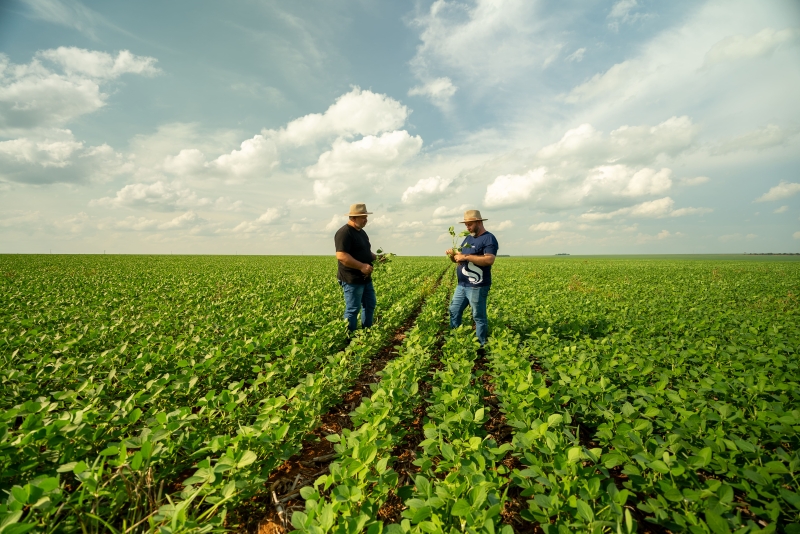
The Mato Grosso Climate and Market series reached its fifth episode in the western region of the state. This week, the team visited the cities of Comodoro and Campos de Júlio and spoke with members of the Mato Grosso Soybean and Corn Producers Association (Aprosoja MT). During the meetings, producers reported the difficulties faced at the beginning of the 2026/27 harvest. The two most cited problems in the region were grain transportation logistics, high costs, and irregular rainfall.
To hear the producers' accounts, Aprosoja MT traveled approximately 700 km to Gilmar Rossatti's property in Comodoro. There, the coordinating delegate of the Guaporé Valley region, Yuri Nunes Cervo, explained that the region is facing difficulties due to lack of rain, with periods of up to 18 days without precipitation, necessitating replanting.
“The specific situation there in the Guaporé Valley, where we are located, is that we are experiencing periods of up to 18 days without rain. The temperature is reaching 2 degrees above the average of last year and the year before, which greatly affects the development of the soybeans. We already have an area on our farm designated for replanting. So, two plots already need to be replanted. We hear a lot about this in this low-altitude region, which is experiencing a bit more unevenness in rainfall,” he said.
Gilmar Rossatti also reported the logistical difficulties faced by producers. According to him, because they are closer to Vilhena, in Rondônia, part of the region's demands are met by the neighboring state, which increases the costs of freight and fuel to transport the grains to other municipalities in Mato Grosso.
“The logistics cost will also be high, due to the price of fuel, which is a bit high. How can I put it, the situation isn't the best, because currently, in our municipality, we basically only have one receiving trading company. Because of this, transportation ends up being a bit more distant, which hinders the harvest somewhat,” he explained.
Just as in Comodoro, in Campos de Júlio the lack of rain and logistical difficulties were also pointed out by rural producers. In the city, the coordinating delegate Jonathan Guadagnin explained that some regions went more than 30 days without rain, compromising the development of already sown soybeans. He also mentioned the occurrence of isolated rains, which harm the uniformity of crop development.
To conclude the fifth episode of MT Climate and Market, Aprosoja MT spoke with farmer Ademir Scariote, from Campos de Júlio, about soybean productivity expectations. According to him, it will be necessary to count on the December rains to achieve a good result in the region. The farmer also reported that an area was compromised by the lack of rain. Planting took place on October 9th, but due to the absence of rainfall, the crop did not develop as expected, with approximately 30% of the plot being compromised.
“We had regular rainfall, not with very high rainfall levels, but enough for us to plant within the expected timeframe and even finish planting ahead of schedule. But we also had some setbacks. We already have areas that have gone more than 30 days without rain, with no rainfall recorded at all. Some areas of the property itself were quite affected. We have an area that suffered a bit from the irregularity of the rains and also from the lack of precipitation,” he said.
In this fifth episode, Mato Grosso Clima e Mercado traveled approximately 700 km to get a firsthand look at the reality of rural producers in the Western Region. In the next episode, the organization will interview farmers from Sapezal and Campo Novo do Parecis. The Aprosoja MT project aims to monitor the conditions faced in the field and reinforce the organization's commitment to rural producers.