 EN
EN  PT_BR
PT_BR 
Disease caused primarily by Colletotrichum graminicola gains importance in the reproductive stage and can compromise plant support, grain filling, and harvesting efficiency.
Stem anthracnose is among the problems that can compromise the crop of corn Primarily during the reproductive phase, when the plant concentrates its resources on grain formation and filling. Caused mainly by the fungus Colletotrichum graminicola, the disease causes internal rot, weakens supporting tissues, and increases the risk of lodging and breakage before harvest.
The reproductive period of corn, between stages R1 and R6, is marked by a high transfer of photoassimilates to the grains. Photoassimilates are compounds produced by the plant, mainly from photosynthesis, and used in its growth and production.
When there is a lack of water, low fertility, or a severe attack of foliar diseases, the plant may increase the use of reserves accumulated in the stalk to support the ear. This process leaves the tissue more vulnerable to colonization by the fungus and the progression of rot.
The pathogen can remain in the area between harvests. The fungus can survive in infected corn remains, infested seeds, and volunteer plants. When it finds favorable moisture and temperature, it produces spores that can be spread by rain, wind, and mechanized operations.
After infection, the fungus can reach the stem tissues and advance internally, causing necrosis and degradation. In more advanced stages, the stem loses strength and may break near the base or below the ear.
Several factors interfere in this process. Water stress between R1 and R3 is identified as one of them, because it increases the need to mobilize the stem's reserves. Nutritional balance also plays an important role. Excess nitrogen can favor more tender tissues, while potassium deficiency reduces the plant's mechanical resistance and defense capacity.
Severe foliar diseases can also contribute to the problem. Polysora rust, white spot, and cercospora leaf spot are among the examples cited in the content. When these diseases reduce the active leaf area, the plant relies more on stem reserves to maintain grain filling, increasing its vulnerability.
Another factor that requires attention is plant density. Very high populations can increase competition for water and nutrients and favor conditions of higher humidity within the canopy, which corresponds to the set of leaves and plant structures that form the crop cover.
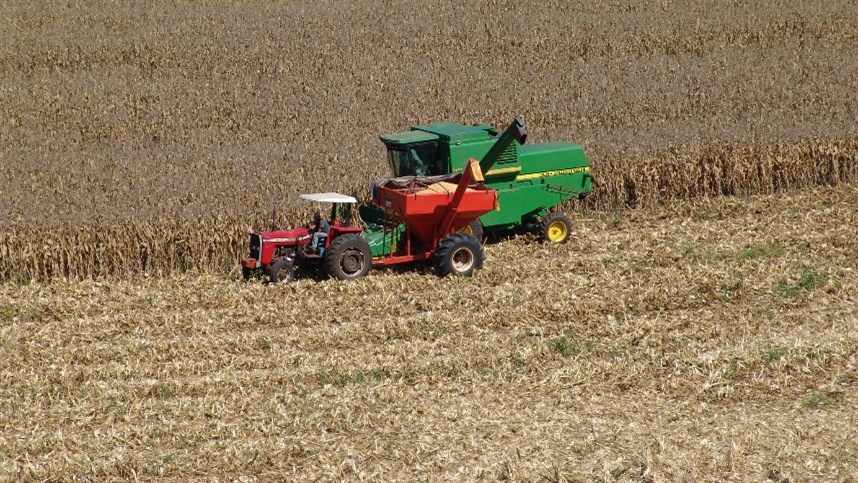
The damage becomes more apparent when the stalks are already weakened. Broken or lodged plants hinder the operation of harvesters and can cause loss of ears of corn in the field.
Winds and rain near harvest time represent an additional risk for plants with advanced rot. Under these conditions, weakened plots may show a greater number of fallen plants before the machines enter. One of the challenges is to detect the problem before this stage. Stalk anthracnose can go unnoticed in assessments carried out only from a distance. In many cases, the producer observes lodging, but internal rot needs to be confirmed by inspecting the stalk tissues.
Therefore, monitoring between stages R3 and R5 is recommended as a tool to assess the risk of breakage. One of the techniques described is the push test, in which representative plants are tilted laterally at approximately 30 to 40 degrees. If they break easily or present hollow and darkened stems, there is an indication of a high level of rot.
Another option is to cut suspected plants lengthwise. The presence of dark, frayed internal tissue with cavities indicates an advanced stage of deterioration. This assessment can help in deciding whether to bring forward the harvest when there is a high risk of lodging.
Prevention begins before symptoms appear. Choosing more tolerant hybrids with good stalk health is highlighted as one of the main measures. The material recommends considering results from official and regional trials, as well as observing the stability and behavior of the materials in years of greater stress. It also advises avoiding concentrating the area on only one susceptible hybrid.
Nutrition is another component of management. Soil analysis and, when possible, leaf tissue analysis help in adjusting fertilization. The content especially highlights the need for a balance between nitrogen and potassium and the maintenance of adequate potassium levels, a nutrient related to stem strength and the plant's water balance.
Crop rotation also plays an important role because it reduces the continuity of the host and can decrease the amount of inoculum, the term used for the pathogen structures capable of initiating new infections.