 EN
EN  PT_BR
PT_BR 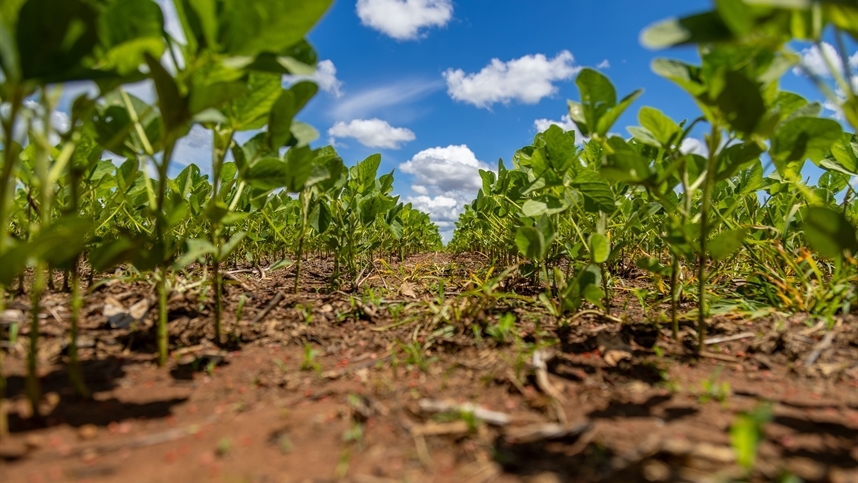
Weed management needs to be planned throughout the entire production cycle, not just when weeds appear in the field. The strategy should consider the area's history, the species present, the seed bank, soil cover, the competitive capacity of crops, the presence of brachiaria grass, crop rotation, and what will be planted in the following cycle. To better understand this, the Research Centers (CTECNO) of the Mato Grosso Soybean and Corn Producers Association (Aprosoja MT) are developing studies to clarify the importance of weed management planning.
In this system, the use of agricultural inputs remains an important tool for weed control, but it is no longer the only strategy used by the producer. The integration of different agronomic practices can reduce the opportunities for emergence, growth, and reproduction of weeds, decreasing dependence on chemical control. One of the main points for management is understanding that the work does not end with the harvest of a crop. The infestation observed in a field is the result of decisions made previously and can also influence future harvests. Therefore, planning must consider the production system as a whole.
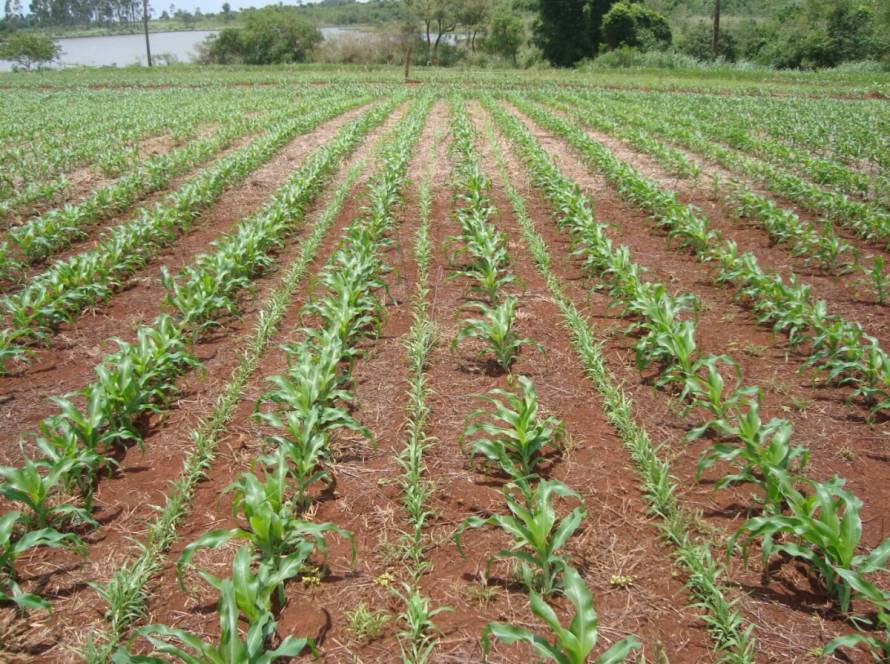
The integration of agricultural crops, brachiaria grass, ground cover, and, when applicable, grazing, helps keep the area occupied for longer throughout the year. With less space and resources available, weeds find it more difficult to emerge, establish themselves, and develop. The goal is not only to ensure crop productivity but also to deliver the area in better condition for the following crop. In this way, each production cycle can contribute to reducing the weed population and decreasing the pressure on crops that will be planted later.
Area diagnosis
Before defining any control strategy, the producer must know the conditions of the area. The diagnosis should consider the weed species present, their density and distribution in the crop, their stage of development, the history of infestation, previous crops, herbicides used, and the response to treatments. It is also necessary to observe possible recurring escapes, suspected resistance, soil fertility and compaction, existing cover, water availability, and the production system that will be implemented subsequently.
An escape of weeds after the application of a pesticide, for example, does not necessarily mean that resistance exists. The failure may be related to the dose used, the plant's growth stage, environmental conditions, water quality, application coverage, or the timing of the product application. Therefore, these factors need to be evaluated before confirming possible resistance.
Another point of attention is preventing surviving plants from reaching the seed production stage. A soybean crop that finishes its cycle with weeds producing seeds can increase infestation in corn and brachiaria grass that will be planted later. Similarly, plants that remain in the area after harvest can continue their cycle and contribute to increasing the seed bank.
Crop rotation and the use of cover crops also modify land use, resource availability, and the amount of crop residue on the soil. These practices can reduce opportunities for weed establishment. However, diversification of the system alone does not eliminate the problem. Different production systems can favor different species and alter which weeds become predominant in the area. Therefore, even in diversified systems, monitoring remains necessary.
Management strategy
Management also needs to continue after the application of inputs. It is necessary to check which species were controlled, which remained in the area, whether new emergence flushes occurred, whether there was seed production, and what the soil cover was like.
A treatment may show a high percentage of control immediately after application and still not be sufficient for long-term management. If surviving plants produce seeds, the infestation may increase in subsequent crops. Furthermore, repeated exposure of a weed population to the same mechanism of action increases selection pressure and may favor resistance. Therefore, reducing weed populations beforehand through soil cover, crop competition, rotation, and prevention of seed production also contributes to preserving the effectiveness of the products.
The quality of execution in the field is another determining factor. Desiccation, equipment adjustment, sowing, seed distribution, and application technology can define the success of a management strategy. Training operators, technicians, and producers is also part of this process. The goal is not to remove products from the production system; they remain important tools for weed control. The strategy is to reduce the exclusive responsibility of chemical control and integrate soil, crop, straw, and crop rotation to decrease the weed population.
In this way, weed management ceases to be an action focused solely on eliminating weeds present in the crop and begins to consider future cycles. Each harvest, the producer can work to reduce infestation, decrease the seed bank, and make the production system less favorable to the development of these plants. To learn more about integrated weed management, check out the results from the Research Centers of [Company Name]. Aprosoja MT.