 EN
EN  PT_BR
PT_BR 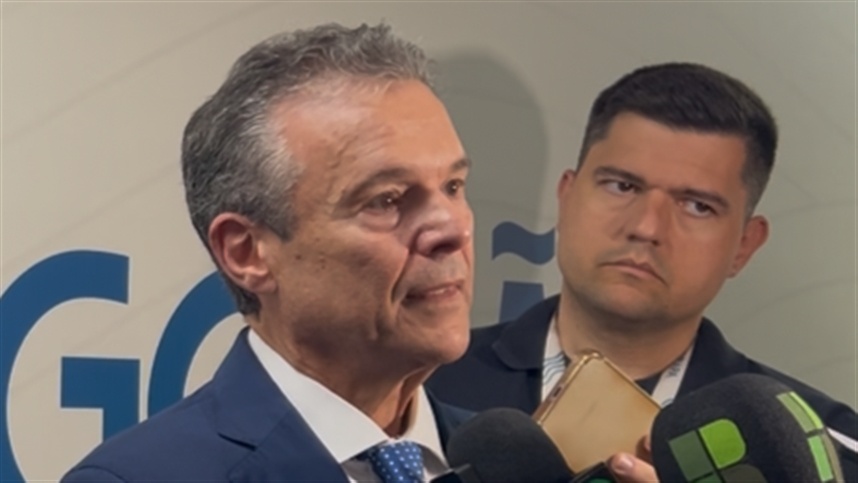
The Minister of Agriculture and Livestock, André de Paula, stated that there is currently no concern about a shortage of fertilizers in Brazil. During a press conference at the 15th Brazilian Cotton Congress in Belo Horizonte (MG), he said that the government has been seeking alternative suppliers abroad and, simultaneously, is working to expand national production of inputs. The minister's participation in the congress occurred during an official agenda of the Ministry of Agriculture and Livestock in Minas Gerais.
One of the measures highlighted by the minister was a commitment to supply 3.8 million tons of phosphate fertilizers, signed during a recent mission to Morocco.
"There in Morocco, alongside many Brazilian businesspeople who accompanied our mission, we had the pleasure of signing a commitment to supply 3.8 million tons of phosphate fertilizers. That's about 80% of what we need," he stated.
According to André de Paula, the search for new suppliers is part of what the Ministry of Agriculture calls "fertilizer diplomacy," a strategy aimed at building international relationships to guarantee the necessary inputs for Brazilian agribusiness in the face of uncertainties caused by international conflicts.
"I would say that the specter of shortages, at this moment, is gone," he declared.
External dependence continues to challenge Brazil.
Despite the assessment of short-term supply, the minister acknowledged that the high dependence on imports remains a structural challenge for the country.
According to him, Brazil imports more than 90% of the fertilizers it uses, a situation that makes agricultural production more exposed to international market conditions.
To address this dependence, André de Paula highlighted the National Fertilizer Program and a set of short- and long-term measures aimed at expanding domestic production.
"The National Fertilizer Program has a set of planned actions, both short-term and long-term. It is very important," he said.
Among the initiatives mentioned is the resumption of production at fertilizer plants linked to Petrobras.
According to the minister, three factories have already restarted and are producing. Urea production at the plants in Bahia, Sergipe, and Paraná has resumed, according to information released by Petrobras.
The next step involves the Nitrogen Fertilizer Unit III, UFN-III, located in Três Lagoas, Mato Grosso do Sul.
"When the fourth factory is ready, we will have reached a mark of approximately 35% of what we need," stated André de Paula.
Petrobras also reports that, with the entry of UFN-III, the expectation is that the company will be able to supply approximately 35% of the national urea market.
According to the minister, expanding domestic production is one way to reduce the exposure of Brazilian agribusiness to international fluctuations.
"This is a challenge that is being faced with professionalism, seriousness, and long-term planning," he stated.
Ships carrying fertilizer gain priority.
In addition to securing suppliers, the government is also working on the logistics of fertilizer entry into the country.
André de Paula stated that there was coordination with the Ministry of Ports and Airports to prioritize ships carrying fertilizers during the start of the harvest season.
According to him, the accumulation of vessels in ports can increase the time needed to unload supplies and affect distribution precisely at the time of greatest demand in the field.
“We are now in the midst of the harvest season and, often, the ports, due to the backlog of vessels, end up extending the deadlines. We are aware that, at this moment, we need to speed up this process,” he explained.
According to the minister, the measure aims to accelerate the entry of products and reduce logistical risks for producers who depend on fertilizers for crop planting.
The minister also ruled out a diesel shortage.
Another point addressed at the press conference was the supply of diesel fuel in the face of international conflicts.
André de Paula stated that there is no concrete indication at this time that there could be a fuel shortage during the harvest season.
"There is no indication that this could happen," he said.
The minister also commented on reports of isolated supply problems in Rio Grande do Sul. According to him, any occurrences may be localized and should be monitored by the responsible authorities.
"There is no expectation, at this moment, that translates into anything concrete regarding a possible diesel shortage. I want to reassure our producers that everything that depends on the government will be done so that we do not have any disruption," he stated.
El Niño mobilizes actions
Weather conditions were also discussed at the press conference. André de Paula stated that the government is already beginning to see the effects of El Niño and that a task force involving 24 ministries has been structured to respond to the potential impacts.
According to the minister, the work is coordinated by the Civil House and involves, in addition to agriculture, areas such as health and Civil Defense.
"All aspects, all the possible outcomes, whether related to agriculture, health, or Civil Defense, have been considered," he stated.
According to André de Paula, R$ 1.3 billion is projected for actions related to the impacts of the phenomenon.
The concern arises precisely at the beginning of a new harvest season, a period in which climatic conditions begin to have a direct influence on the planting and development of crops.
Government nears target of 700 markets.
In the area of foreign trade, André de Paula reported that Brazil has reached the milestone of 693 markets opened since the beginning of the current government and is close to the goal of 700.
"At the beginning of the administration, we set ourselves a goal of 700 markets. We are at 693 and quickly, perhaps even this month, we will reach 700 and surpass that goal," he declared.
The minister attributed the progress to the quality of Brazilian products and to work related to sanitary defense and the opening of international markets.
During the press conference, he also highlighted Brazil's position in the global cotton market and stated that the current Brazilian Cotton Congress is taking place at a time when the country is recognized as the world's largest exporter of the fiber.
According to André de Paula, the result is related to the producers' performance.
"Brands like this are a testament to the efficiency and competence of our producers," he stated.
The agricultural plan and debt levels are still being monitored.
When questioned about the Harvest Plan and the indebtedness of producers, the minister stated that the issue is monitored daily by the Secretariat of Agricultural Policy.
During the press conference, André de Paula did not present updated figures on the debt situation, but he said that monitoring occurs throughout the implementation of the Plano Safra (agricultural plan).
“This is an issue that our Secretariat of Agricultural Policies monitors daily. I personally cannot say at what stage we are, but I want to assure you that, as this is a very important issue for our sector, we are following this process closely,” he stated.
The minister also cited measures related to rural insurance and stated that indebtedness remains among the issues on which the government has been working.
Regarding fertilizers, the main focus of the press conference for the start of the harvest season, André de Paula emphasized that the strategy combines expanding national production, diversifying international suppliers, and implementing logistical measures to ensure the inputs reach the producer.
"Fertilizer diplomacy," the minister summarized when explaining the search for alternatives to reduce supply risks.