EN
EN  PT_BR
PT_BR 
THE soy 2026/27 in Paraná begins with a record production forecast of 22.6 million tons, in an estimated area of 5.76 million hectares. According to data released by the Department of Rural Economy (Deral), of the Secretariat of Agriculture and Supply (Seab), on Thursday (27), the expected average productivity exceeds 3,900 kilos per hectare, but the weather will be decisive in confirming the result.
Last week in August, Deral released its first estimate for the 2026/27 soybean crop in Paraná. The initial projection indicates a record production of 22.6 million tons, with an estimated area of 5.76 million hectares. This estimate represents a marginal increase in area compared to the previous cycle and maintains soybeans as the main crop in Paraná's agriculture. The expected average productivity for the state exceeds 3,900 kilograms per hectare, indicating high productive potential for the new season.
Despite the favorable outlook, confirmation of the projected volume will depend mainly on weather conditions during the crop cycle. According to data released by Deral, the 2026/27 harvest begins under the influence of the El Niño phenomenon, which tends to increase the frequency of rainfall in southern Brazil, especially during the spring.
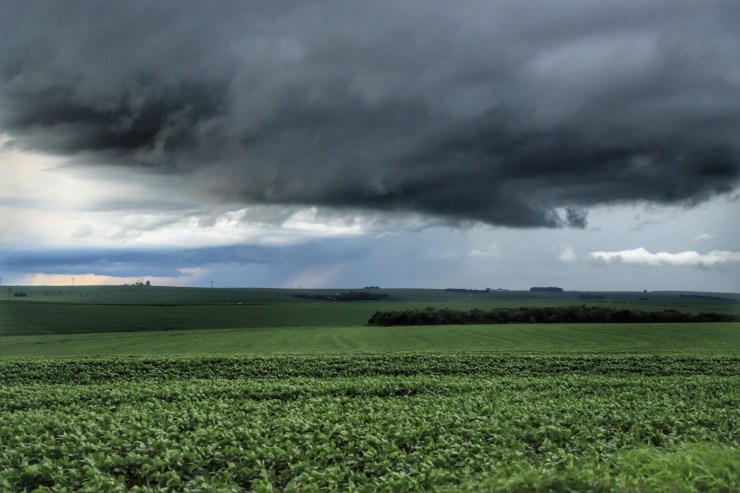
In Paraná, the main risk associated with this phenomenon is the occurrence of frequent rainfall and excess moisture. This scenario could interfere with planting, harvesting, and crop management throughout the development of the crops.
The months of September and October deserve special attention because they coincide with the planting and establishment period for a large part of the crops. According to data released by Deral, persistent rains can hinder planting and reduce the operating windows available to producers. Between November and January, during important phases of development, flowering, and grain filling, both excess rain and eventual periods of water deficit can affect the productive potential. Excess rainfall can also become a problem again at the end of the cycle. In February and March, rainfall well above average could impact harvesting and hinder the progress of field operations.
Initial expectations for Paraná's soybean crop are positive, but the actual performance of the harvest will still depend on weather conditions. According to data released by Deral, the behavior of meteorological conditions will be crucial in transforming the projected productive potential into a new record harvest in Paraná.