 EN
EN  PT_BR
PT_BR 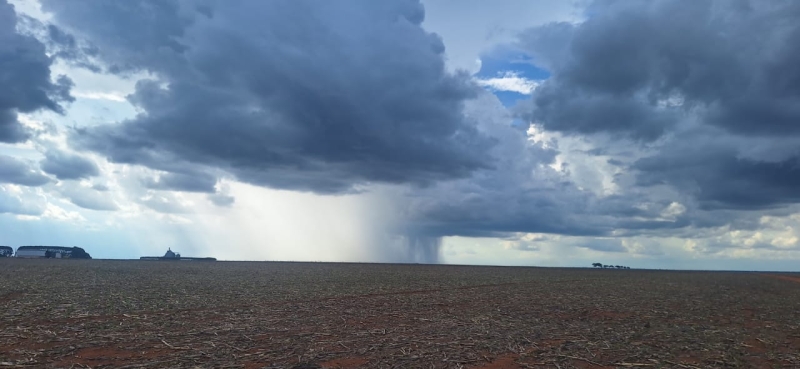

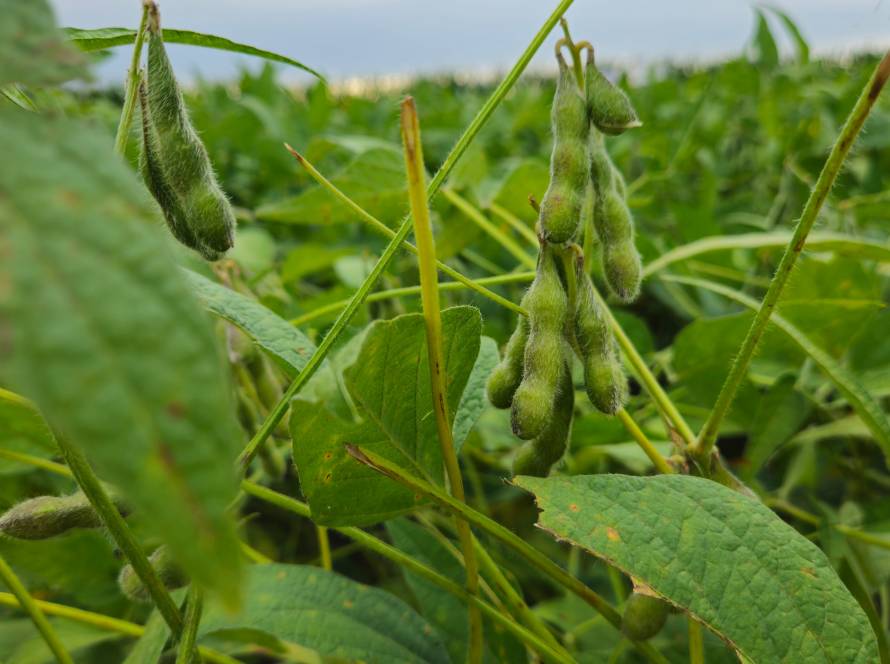
The 2026/27 Brazilian soybean harvest is beginning to take shape under very different scenarios, even within Mato Grosso itself. During two days on the road through the north of the state, Notícias Agrícolas encountered everything from producers working with expected yields of 80 sacks per hectare, favored by good rainfall, to crops with irregular emergence, interrupted planting, and the possibility of replanting due to lack of moisture.
Properties were visited in Cláudia, União do Sul, Santa Carmem, and Tabaporã. The picture found by the report is of a harvest that, in general, begins with good prospects, but still depends on the regularization of rainfall in some areas.
More than soybean productivity, however, another clock is already ticking in the fields: the window for the second corn crop. This concern has emerged in conversations with producers and is gaining weight, especially in regions where delays or interruptions in soybean planting are beginning to push the calendar forward.
Claudia: Rain helps and expectations reach 80 sacks.
At Fazenda Boa Esperança, in Cláudia, the Canozo family cultivates 2,500 hectares. Planting began on September 9th, and at the time of the survey, between 15% and 20% of the area had been sown. Carolina Canozo, Martinho Canozo, and Gabriel Canozo reported good rainfall conditions for the start of the work and maintain high expectations for the season: an average of 80 sacks of soybeans per hectare. Most of the area receives medium-cycle varieties.
Beyond the productive potential, one number helps to illustrate the economic reality of this harvest: the cost of soybeans on the farm is estimated at approximately 32 sacks per hectare. This calculation shows that, even with a favorable agronomic outlook, productivity remains crucial to sustaining the producer's profit margin.
Southern Union: Good rains accelerate planting.
The scenario was also favorable at Fazenda Mustang, in União do Sul, where Elvio Pelissa and his family cultivate 4,080 hectares. Sowing began on September 26th and had already reached 50% of the area by October 5th, heading towards the final stretch.
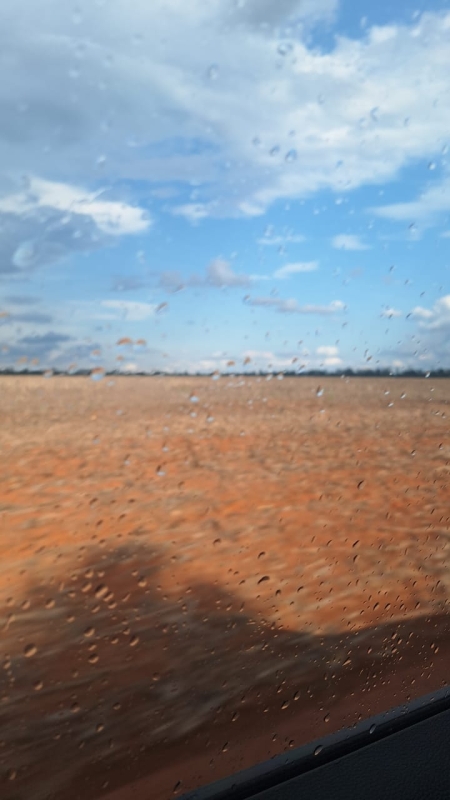
There, unlike areas that are still experiencing irregular rainfall, the rains arrived in good, regular amounts with volumes considered satisfactory, allowing for consistent progress by the machinery.
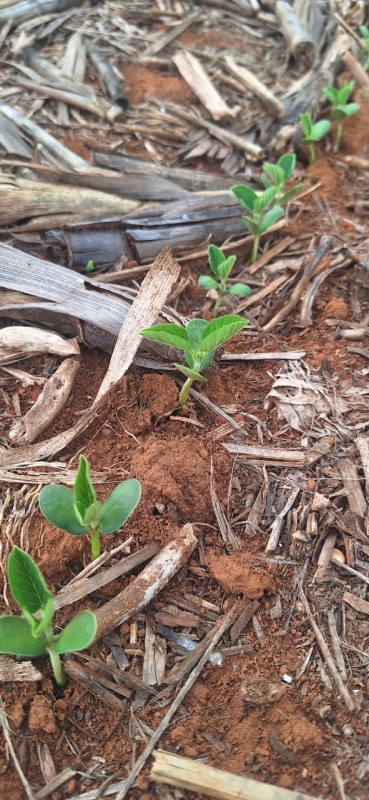
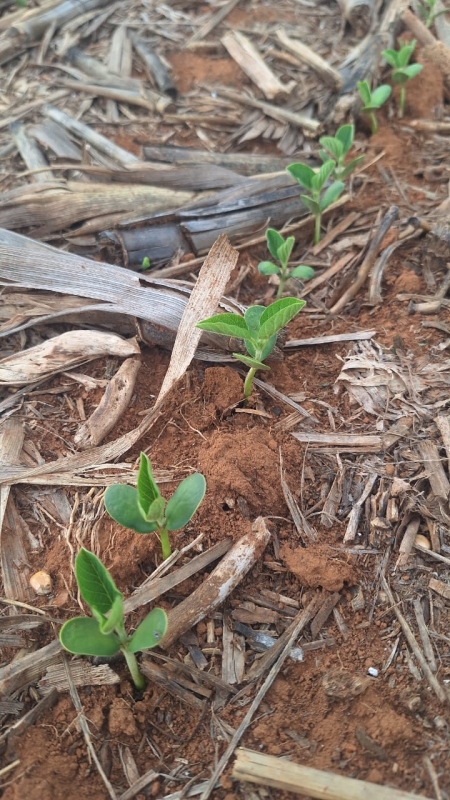
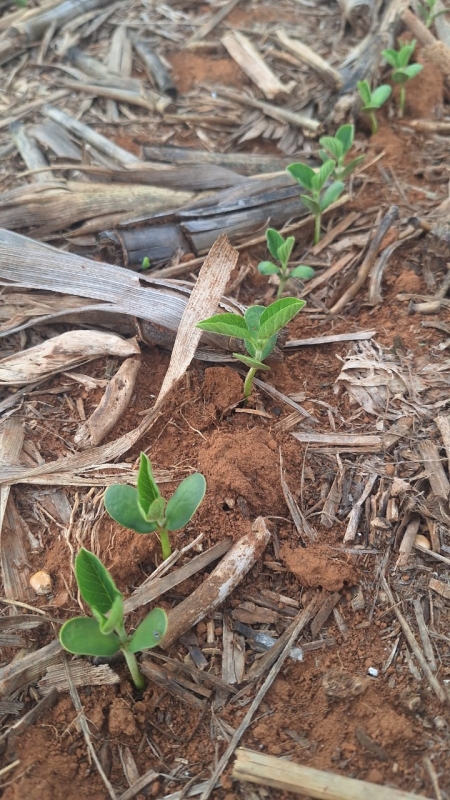
The expectation is also for an average productivity of around 80 sacks per hectare, with a predominance of medium-cycle cultivars. Even with the good start, phytosanitary monitoring already requires attention. Among the concerns is the whitefly, whose presence demands monitoring from the early stages of the crop.
Santa Carmem: Producer waited for the rain and reduced exposure to risk.
At Dona Dozolina Farm, in Santa Carmem, the situation was intermediate. On the 3,920-hectare property, overseen by producer Rudimar Ceni and technical manager Juliano Pinho, the rains took longer to arrive. Sowing began a few days ago and was concentrated in areas where there was sufficient soil moisture.
With a history of high productivity, the farm enters the new season adopting a strategy that goes beyond soybeans: approximately 70% of the area is destined for corn, a decision related to seeking less exposure to risk.
Another point that caught the attention of the Conference was the level of adoption of biological products, used as a tool to make pest control more effective.
The property is also entering the second harvest with reduced phosphate fertilization, a result of a management strategy built upon soil conditions and history. This is an example of how, even in a season where costs generally tend to remain stable, the producer seeks efficiency within the farm gate to preserve results.
Tabaporã sounds the alarm.
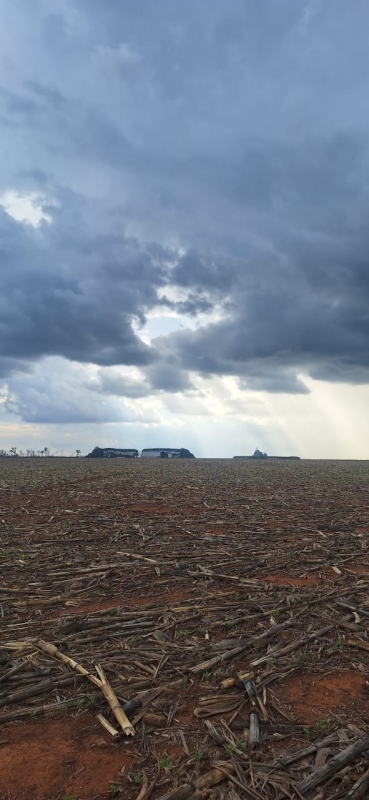
It was in Tabaporã, however, that Notícias found the most delicate situation of the first two days. At Roberto Kempf's Fazenda Passo Fundo, the lack of rain interrupted the progress of planting.
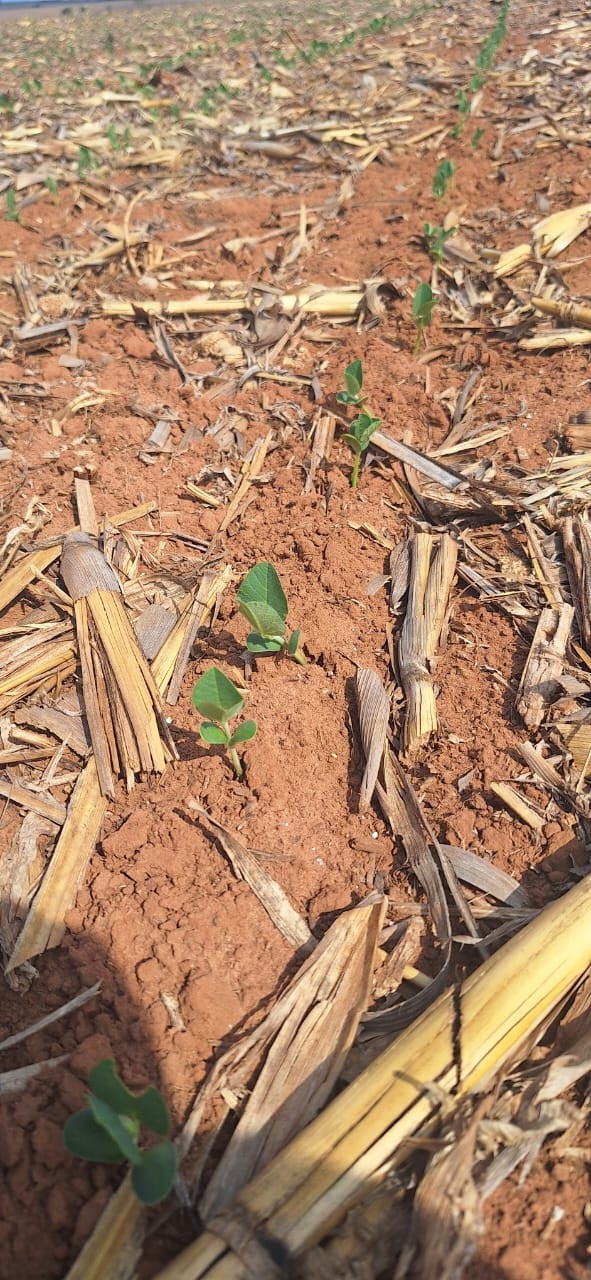
In some plots, when there is sufficient moisture, the team takes advantage of every opportunity and even works 24 hours straight to plant the seed in the soil. In other areas, however, sowing had to stop.
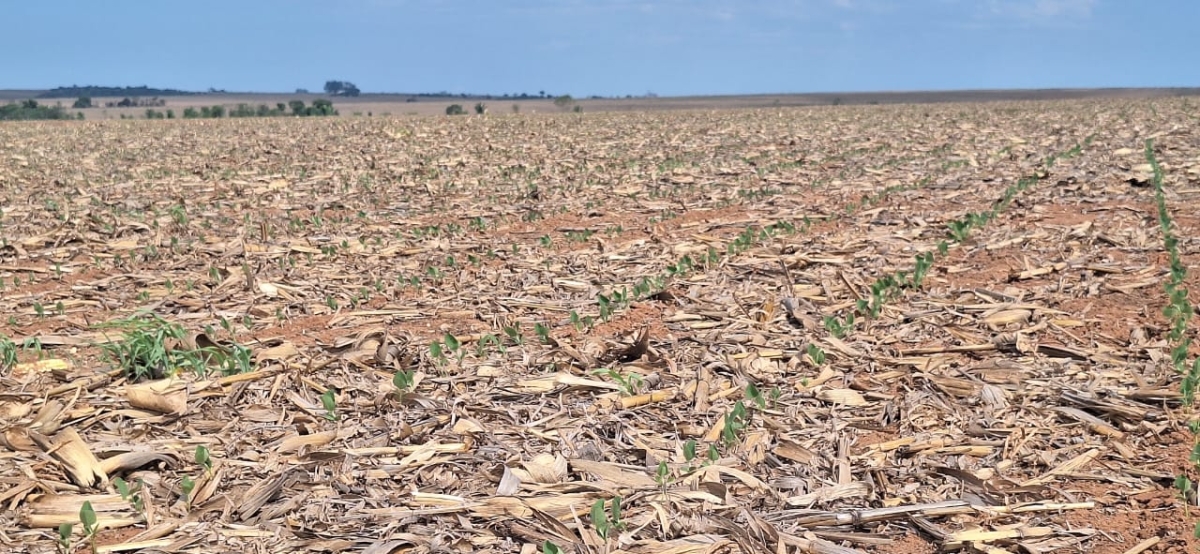
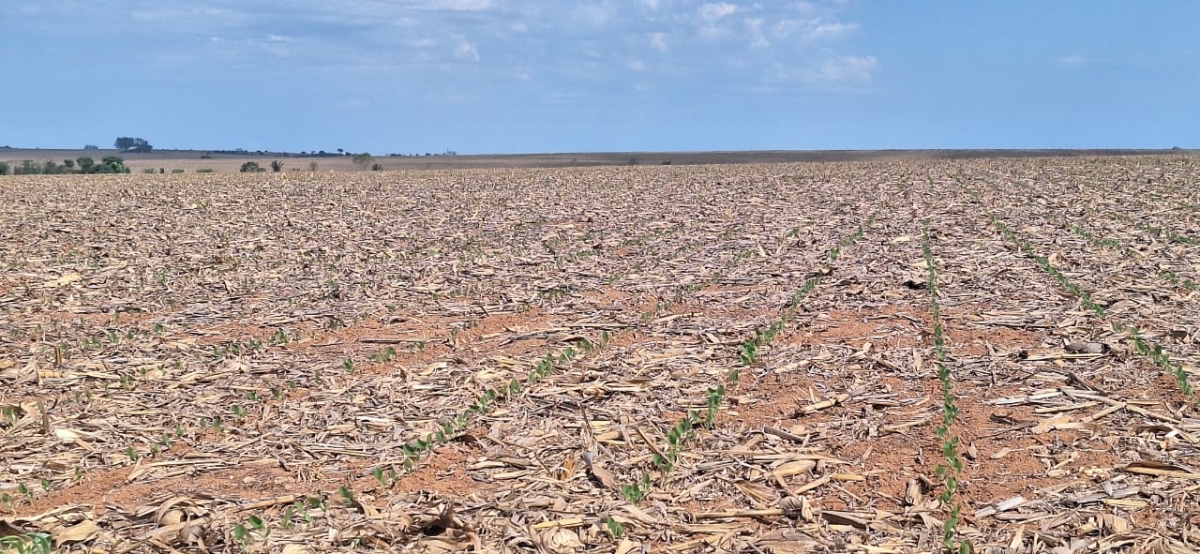
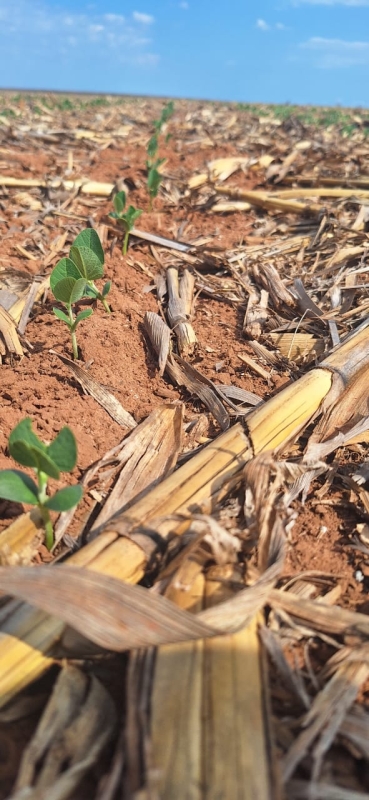
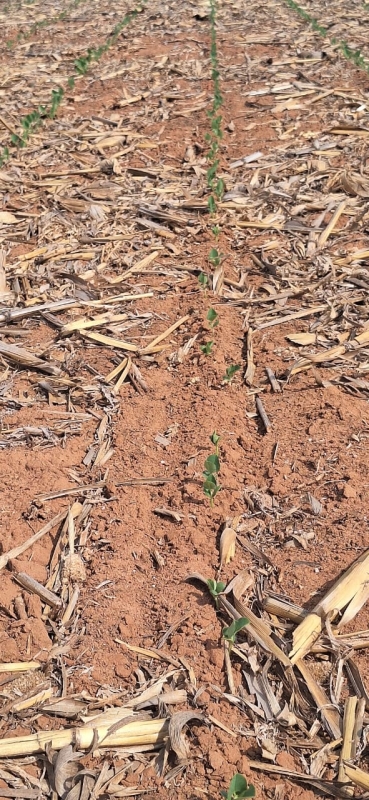
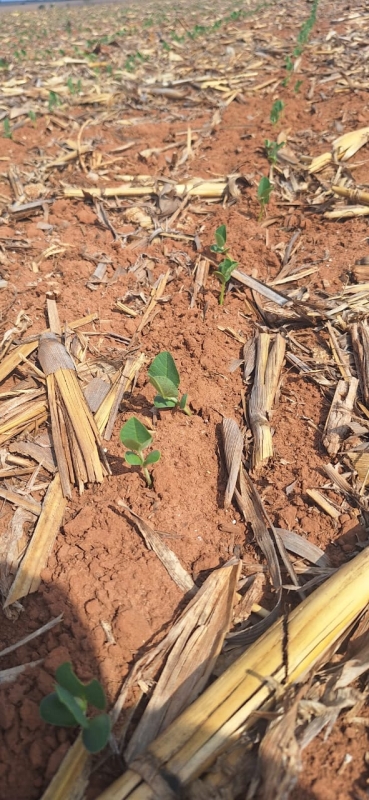
The empty rain gauge sums up part of the concern. In already planted areas, the interruption of rainfall is also beginning to take its toll. The report found plants with uneven development and emergence failures. According to the account on the property, there are areas that may need replanting if the situation does not improve.
Bed bug pressure is also strong and adds another point of attention to initial management.
Tabaporã thus showed the other extreme of the trip: while some regions are working with good water availability and rapid progress of machinery, others continue to wait for the rain needed to consolidate the planting of the crop.
Soybeans are the first crop to be harvested; the second crop follows closely behind. The irregular rainfall is not only a concern for soybean development. Among the producers interviewed during the conference, concern about the second crop window repeatedly emerged, particularly in areas where the soybean planting schedule is starting to fall behind.
Every day lost now could mean a later planting of the corn, increasing the crop's exposure to less favorable weather conditions at the end of the cycle.
In Santa Carmem, where corn occupies a significant portion of the production plan, this equation becomes even more relevant. In Tabaporã, with soybean planting interrupted, the calendar is already being observed with heightened attention.
This is one of the issues that Notícias Agrícolas will be following over the next few months: the impact of the decisions made now on the second crop of 2027.
El Niño is on the radar, but without alarmism
The potential impact of El Niño also came up in conversations held on the four properties. The phenomenon is considered in the producers' planning and decisions, but the report did not find an atmosphere of alarmism. The prevailing sentiment is one of constant monitoring of forecasts and adaptation of operations according to the conditions actually found on each property.
The difference observed between municipalities reinforces this view: within the same producing region, the distribution of rainfall already produces quite distinct realities.
Costs, investments, and succession planning also factor into the harvest season.
The report also found two elements that go beyond the condition of the crops. In general, the producers visited indicated that they were maintaining their cost and investment levels, without major expansion movements at the start of the season. The predominant strategy is to preserve efficiency and productivity.
In the conversations, a theme that will accompany the project also emerged: family succession. There are properties where a new generation is already directly involved in management and others where the succession process is being built. These are families that are not only planting the 2026/27 crop, but also defining who will be in charge for the next ones.
The political environment also emerged spontaneously during the visits. The producers interviewed expressed expectations for changes in the political and economic landscape that could improve conditions for agribusiness. Since these were four properties, the accounts represent the perceptions of those interviewed and do not allow for generalizations about the sentiment of the sector in the state.
A good harvest is beginning to emerge, but the rain will still be the deciding factor.
After visiting four properties and traveling for two days through northern Mato Grosso, the initial assessment is predominantly positive. There are areas showing good progress, producers aiming for high yields, and crops beginning to respond well where water arrived in the right quantity and at the right time.
But Tabaporã issues a warning. The 2026/27 harvest is only just beginning, and the rain is shaping different starts within Brazil's largest soybean producer. The harvest projected in the numbers is one thing. The harvest that actually begins on the farm gate is another.