 EN
EN  PT_BR
PT_BR The 2024/25 cotton harvest in Mato Grosso is heading towards record results. The state is the largest producer of the fiber in the country. According to the September 1, 2025 report from the Mato Grosso Institute of Agricultural Economics (IMEA), the average productivity of the cycle was estimated at 308.08 arrobas per hectare, which represents 5.61% above the previous harvest. If confirmed, it will be the second highest average productivity in the historical series. The good performance is related to out-of-season rains, which prolonged the crop cycle. "In the main producing regions, we had rainfall at crucial times," explained Daniela Dalla Costa, a Phytotechnics researcher at the Mato Grosso Agricultural Research Support Foundation (Fundação MT).
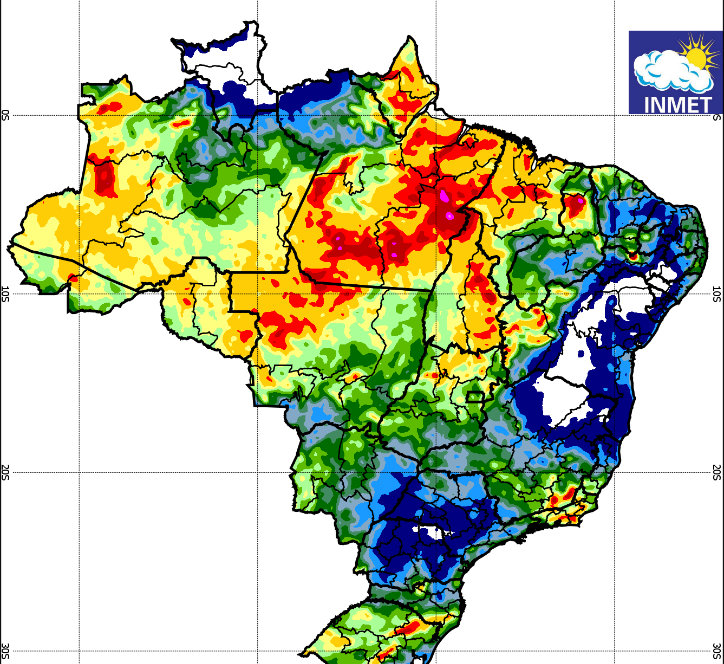
Although the atypical rains recorded in May and June affected a few crops that already had open bolls, in most of the cultivated area they resulted in increased productivity. This was the case in the research area of the MT Foundation, located in Sapezal. "In particular, the May rain caused a greater retention of reproductive structures, which triggered greater boll filling and resulted in better final yields," said the researcher.
In the MT Foundation's trial in Sapezal, an average of 393 arrobas of seed cotton per hectare was observed, reaching a productivity of 457 arrobas per hectare in some areas. "This data comes from a year with atypical rainfall. This won't happen every year. We need to ensure proper crop management, cultivar selection, and sowing time to achieve higher productivity levels," warned researcher Daniela Dalla Costa.
According to IMEA, the area cultivated with cotton in the state remains estimated at 1.52 million hectares, representing an increase of 4.18% compared to the 23/24 crop year. Therefore, the total expected production for the 24/25 crop year is 7.04 million tons of seed cotton, of which 2.90 million tons are lint cotton, 11.38% more than in the previous cycle.
Time has made up for the delay in cotton planting, but producers are still struggling with rising production costs.
Unusual rainfall compensated for the delay in cotton planting in the state. According to the latest IMEA report, the harvest is approximately 8% behind schedule compared to the previous crop. The cotton cycle suffered delays from the beginning due to soybean planting, which was postponed by lack of rain, impacting the cotton calendar. Producer Alexandre Schenkel, who is also an agronomist, highlights that, despite the risks of late planting, the harvest exceeded expectations. “It was a year with excellent production and quality. The weather helped, and we had good HVI (fiber quality index) results,” he explained.
The climate factor and the challenges of the 24/25 harvest were debated during the 17th Cotton Technical Meeting, held by the MT Foundation in early September in Cuiabá. “Due to high costs and low prices, it was a year when we really needed to produce well. Most cotton producers will be able to achieve good productivity. This brings peace of mind for planning the next harvest,” said farmer Lucas Daltrozo, from Primavera do Leste, who represented the southern region on the panel.
Expectations for the 25/26 cotton crop
With the harvest almost complete, rural producers and specialists are already planning the next planting season. “It’s still too early to assess whether or not to reduce the planted area, but I believe it will happen, given the production costs and all the difficulties we are facing,” analyzed Márcio Souza, project and technology dissemination coordinator at the Mato Grosso Cotton Institute (IMA), who moderated the panel discussion on the results of the 24/25 harvest at the event held by the MT Foundation.
“What will the producer do? Those areas where there is no productive potential, those areas will not be planted because the producer does not want to take risks; he wants to seek the maximum production ceiling,” stated Márcio Souza.
For Fernando Piccinini, agricultural manager of the Bom Jesus Group, identifying and segregating the most productive areas was fundamental to understanding where to invest. “We identified plots yielding over 400 arrobas and others below 250,” he reported. “The idea is precisely to evaluate, based on this harvest, what we will do differently in the next one,” concluded the agricultural manager.
Another point that cotton farmers in Mato Grosso are monitoring is the demand for cotton fiber from other countries. Regarding the 24/25 harvest, exports remain estimated at 2.06 million tons, according to IMEA. The competition in the textile industry is with synthetic fibers. “We need to continue investing in certifications such as ABR (Responsible Brazilian Cotton) and Better Cotton. To show the world that our fiber is natural, does not degrade, and does not leave residues for future generations,” stated the rural producer and current president of the Brazilian Cotton Institute (IBA), Alexandre Schenkel.