 EN
 PT_BR
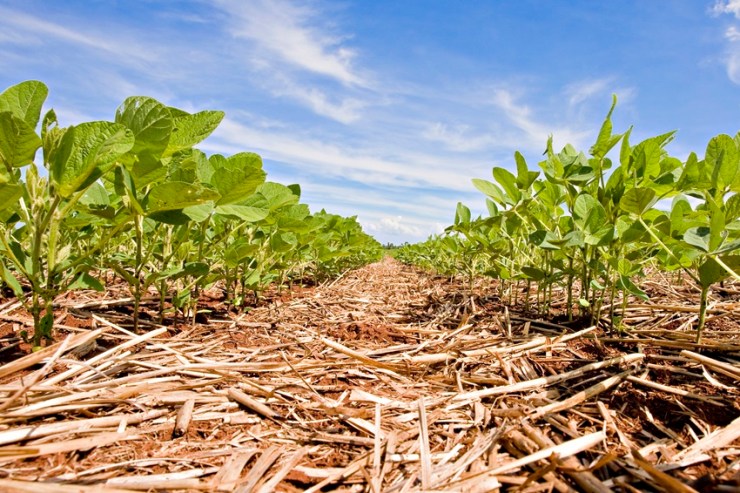
Planting soy Soil with excess moisture can compromise plant emergence, increase the risk of compaction, and leave impacts that extend to subsequent harvests. Between September and January, when the main producing regions face periods of irregular rainfall and short windows of dry weather, knowing when to reduce or temporarily halt operations is crucial to preserving soil structure.
In soybean planting, the set of operations involves everything from seed storage to its placement in the soil, including preparation, when necessary, adjustment and movement of the seed drill, base fertilization, and furrow closing. Under conditions of excessive moisture, each machine pass increases the load on the soil and promotes compaction and loss of macropores.
Soil compaction reduces water infiltration and hinders root development. The problem can be even greater when the producer maintains the same number of passes, speed, and machine load on plastic or nearly waterlogged soils, even with a short window to advance with sowing.
Surface moisture, however, should not be the only parameter observed. Even when the top layer appears dry, the profile just below may remain saturated and exhibit high susceptibility to deformation caused by machine traffic.
The load-bearing capacity of the soil also changes as moisture increases. When the soil approaches saturation, water occupies the pores and reduces friction between particles, leaving the structure more vulnerable to deformation caused by the weight of equipment.
In clay soils, the risk is even greater because water facilitates the displacement of clay particles and the compaction of layers that can be difficult to recover. In sandy soils, drainage is usually faster, but excess water can also cause deep ruts and loss of surface structure.
During sowing, wheels, furrow openers, cutting discs, and compaction wheels can contribute to the formation of a compacted layer below the furrow, known as "plow pan" or compacted planting layer. Excessive closure of surface pores and "mirroring" of the furrow walls are also among the possible problems.
These changes hinder water infiltration and root penetration. In areas with no-till planting over mulch, localized waterlogging can further impair soybean germination and emergence.
Excess moisture also directly affects stand quality. Seeds can remain in pockets of water, with less oxygen available, increasing the risk of rotting and uneven emergence.
Plants that manage to emerge in compacted furrows may develop shallower root systems. As a result, they become more susceptible to subsequent periods of water deficit and lodging.
The impact can persist even when the number of plants per meter seems adequate. Differences in vigor and delayed emergence can cause uneven plant size and grain filling, affecting productivity and the quality of the harvested product.
The problem doesn't end with the current harvest either. Compacted layers formed during planting may require future interventions, such as selective mechanical decompaction or the use of cover crops with more aggressive root systems.
These measures increase costs and can reduce the efficiency of water management in subsequent cycles. Therefore, insisting on operating under unsuitable conditions to gain a few days in the planting window can generate consequences that extend beyond the current season.
The decision to reduce or stop planting should consider different signs observed directly in the field. One of them is the clod test: when the soil forms a plastic structure similar to a "little snake" and does not easily break apart, it indicates excessive moisture for heavy machine traffic.
The marks left by tires or tracks also help in the assessment. Deep tracks, with well-defined edges and signs of lateral crushing, indicate that the moisture may be above a safe level to maintain the same operating pace.
The seeder itself offers other signs. The accumulation of soil and straw on the cutting discs, the difficulty in forming a clean furrow, and the excess mud on the compaction wheels indicate inadequate working conditions.
It is also necessary to observe the sowing depth. If the machine tends to sink in wetter areas and has difficulty maintaining the regulated depth, the applied load may be above the soil's carrying capacity at that moment.
When it is not possible to completely stop the operation, some measures can reduce the impacts. These include reducing the speed of the seeder, limiting passes to the minimum necessary, prioritizing areas with better drainage and, when possible, adjusting the tractor ballast to reduce the pressure exerted on the soil.
In more critical situations, concentrating planting during the times of day when the surface has partially dried may be an alternative, even if the window is short.
Prevention begins before the harvest. Maintaining a no-till system with good crop residue cover, using deep-rooted and diversified cover crops, and controlling machinery traffic throughout the year all contribute to increasing the structural stability of the soil.
Soil with adequate structure exhibits greater resilience and capacity to withstand operations under higher moisture conditions. Planning should also consider the planting window and the selection of cultivars adapted to the period, reducing the pressure to enter the field immediately after rain.
Staggering planting areas and monitoring short-term weather information helps adjust planting timing to soil physical conditions. In areas that retain more water, especially those with medium to clayey textures or slow drainage, practices such as improving surface drainage can also be considered.
Regardless of the urgency of sowing, the use of machinery in wet soil must follow safety and responsibility criteria. Operators need to recognize the signs of excessive moisture and adjust the operation of the equipment, avoiding abrupt maneuvers and sharp turns that increase soil deformation.
When planting involves the simultaneous application of inputs, such as fertilizers or in-row seed treatment, the products must be used according to the label, instructions, and agronomic prescription, even if they are not pesticides.
Before continuing the operation, the producer must check if the soil is still plastic, observe the depth of the rows, assess the uniformity of the sowing depth, and reduce speed in the wetter sections. Traffic outside the rows should also be avoided.
When visible soil deformation is severe, temporary suspension of planting may be necessary until moisture returns to a safer range.
The decision should consider the area's history, soil texture, rainfall forecast, and the region's planting window. In case of doubt, an on-site assessment by an agricultural engineer is essential to avoid long-term damage to soil structure and the productivity of future crops.