 EN
EN  PT_BR
PT_BR 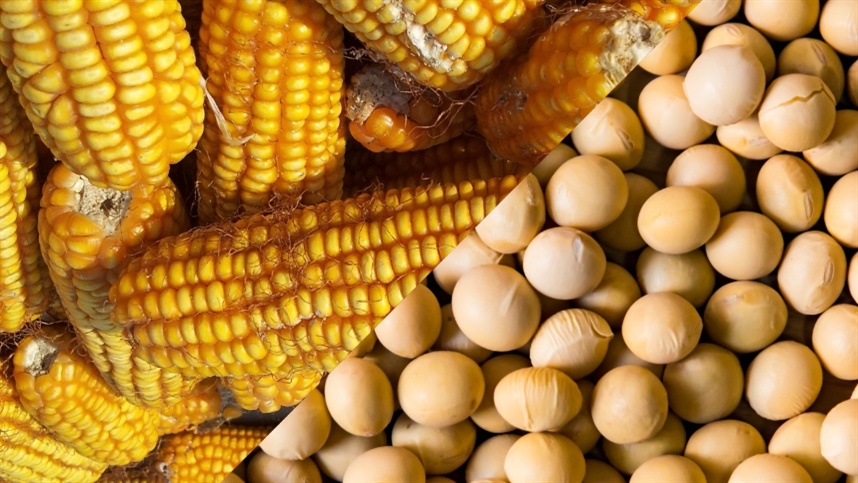
The start of the 2026/27 summer crop season. soy and corn It depends on the regularization of rainfall in the main producing regions. According to data released by Conab, the evolution of climatic conditions will be one of the factors influencing crop performance throughout the cycle, while INMET's forecast indicates low rainfall volumes and high temperatures in much of Goiás and Mato Grosso in the coming days.
The forecast of little rain keeps soil moisture at low levels and requires caution in the planting of rainfed crops. Isolated showers may create momentarily favorable conditions for sowing, but do not guarantee the water availability necessary for germination, emergence, and initial plant establishment.
Therefore, consistent and well-distributed rainfall is just as important as the volume recorded at planting time. A rapid reduction in soil moisture can compromise stand uniformity and increase risks during crop establishment.
This scenario gains importance given the expectation of expansion in the area cultivated with first-crop corn and the continued growth of the soybean area in the country. With low or no rainfall in large parts of the states, planting conditions may vary between municipalities and farms.
According to data released by Conab, this variation will be related, among other factors, to the evolution of climatic conditions throughout the cycle. The antecedent soil moisture and the actual occurrence of rainfall will also be determining factors in defining the progress of operations.
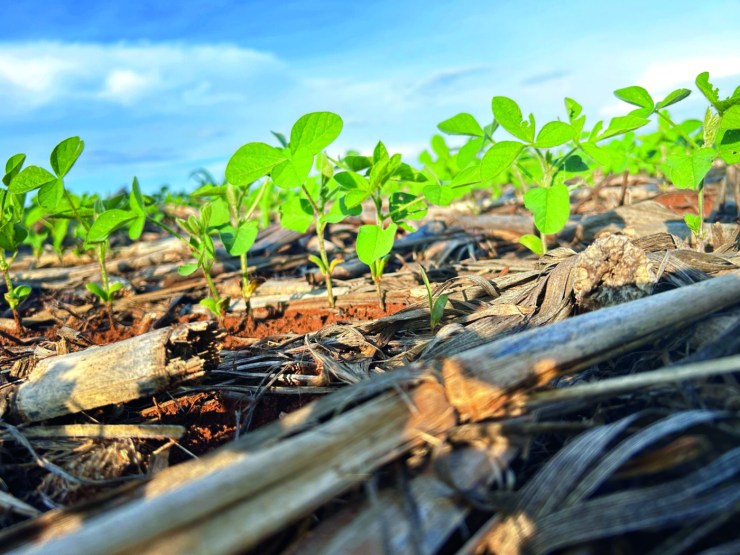
Sowing with limited water availability increases the risk of uneven germination and emergence, stand failures, and the eventual need for replanting. The problem can be even greater in areas where the first rains are not of sufficient volume or distribution.
Another point of concern is the second crop calendar. Prolonged delays in soybean planting in Goiás and Mato Grosso could reduce the window available for planting the second corn crop in succession areas.
Therefore, the definition of the planting date must consider local soil moisture conditions, updated weather forecasts, and recommendations from the Agricultural Zoning of Climatic Risk (ZARC).
According to data released by INMET, the forecast for the next seven days indicates low rainfall totals across much of Goiás and Mato Grosso. Rainfall amounts between 10 and 30 millimeters are expected to be concentrated mainly in the southern portions of these states.
Temperatures are also expected to remain high over northern and southwestern Mato Grosso and western Mato Grosso do Sul. In these areas, maximum temperatures are expected to exceed 30°C.
According to data released by INMET, soil water storage levels will remain extremely low in much of the region over the next five days.
Although the Central-West region is transitioning to the rainy season, the predicted rainfall is not expected to be sufficient to significantly restore soil moisture in much of Goiás and Mato Grosso.
As a result, water availability will remain limited, increasing the dependence on regular rainfall for the start and establishment of rainfed crops.
This condition is especially relevant for soybeans. Low soil moisture can compromise germination and plant emergence if the first rains are insufficient or unevenly distributed.
Therefore, the frequency, distribution, and volume of upcoming rainfall will be crucial for the progress of summer crop planting, especially in areas of Goiás and Mato Grosso that still have low levels of soil water storage.
Monitoring weather forecasts and warnings issued by INMET is also important to support decisions in the fields, reduce operational risks, and improve the planning of field operations.