 EN
EN  PT_BR
PT_BR 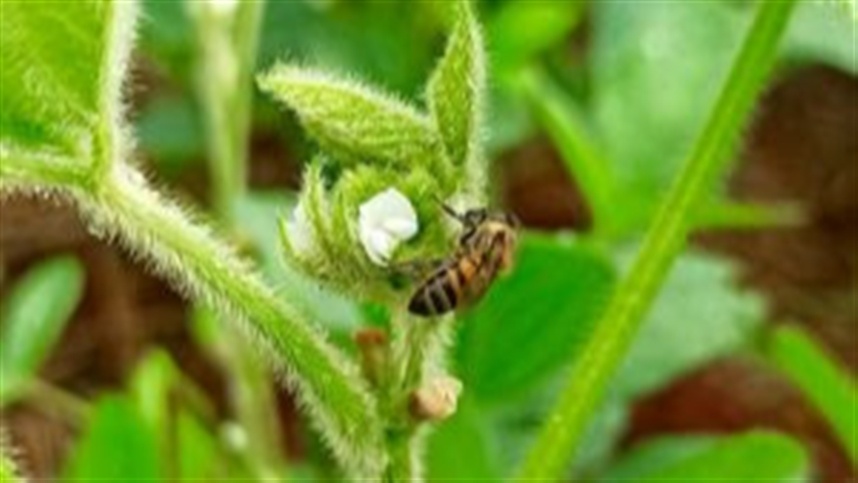
Bees can help to soy to produce more. Studies conducted by Embrapa indicate an average increase of 13% in oilseed productivity when there is an adequate presence of bees around the crops, with results reaching 18% in some cases. Pollination can also favor the number of grains per pod and reduce the occurrence of empty pods.
However, for this relationship to be advantageous for both farmers and beekeepers, it is necessary to adopt practices that allow for coexistence between the two activities. This will be one of the topics of the 4th Beekeeping Meeting, which takes place from September 25th to 27th in Carazinho (RS). On the 25th, the first day of the event, the seminar "Agriculture, Bees and Sustainability" will bring together experts to discuss how grain production and beekeeping can advance in an integrated way.
The program will feature three panels, as well as spaces for debates and clarifications. Among presenters and moderators, 16 experts will share knowledge and experiences about the possibilities and challenges of this integration.
Researcher Décio Luiz Gazzoni, from Embrapa Soja, will be one of the participants. For over a decade, Gazzoni has been researching the relationship between soybeans and bees, and recent studies conducted in Rio Grande do Sul, Paraná, and Mato Grosso do Sul reinforce the possibility of gains for both sides. The presence of bees can increase soybean productivity, while the soybean flowering offers beehives an important source of nectar, with reports of honey production of up to 50 kilograms per hive during the flowering period.
“The integration between soybeans and bees generates interesting gains for both sides. Through pollination, bees increase soybean productivity. The honey produced in this interaction, also known as soybean honey, has a distinct flavor. In other words, everyone benefits from this partnership, especially in terms of sustainability,” says César de Souza, president of the Beekeeping Meeting.
The coexistence between crops and beehives depends on careful agricultural management and communication between producers and beekeepers. Among the measures are knowing the location of apiaries, prior communication about pesticide applications, and adopting strategies that reduce bees' exposure to pesticides. Embrapa emphasizes that good practices can prevent adverse effects on bees and, at the same time, contribute to the productivity and sustainability of production systems.
“Our main focus is to show that there can be a harmonious coexistence between beekeepers and grain producers. There are agricultural practices that can be adopted so that both sides benefit. Farmers and pollinators working together bring gains to the entire ecosystem,” explains Rodrigo Rizzo, coordinator of the panel.
Schedule
The seminar “Agriculture, Bees and Sustainability” will be held throughout the day on September 25th.
At 9:00 AM, the first panel, "Perspectives for Beekeeping and Meliponiculture," will feature Décio Luiz Gazzoni (Embrapa), Gabriel Colle (Sindag), and Pedro Duarte (CropLife) as presenters, moderated by Fabiano Nichele, coordinator of the Beekeeping Project Portfolio at Sebrae/RS.
At 9:55 am, the panel “Coexistence between Agriculture and Beekeeping” will bring together Maurício Fernandes (BASF), Murilo Teixeira (grain farmer) and Maria Eduarda Tostes Carneiro (beekeeper), moderated by Aldo Machado dos Santos, president of the Beekeeping Commission of Farsul.
At 10:50 AM, there will be time for debates and clarifications, coordinated by Aroni Sattler, from UFRGS and the Sectoral Chamber of Seapi.
The seminar is organized by the Beekeeping Meeting and the Apiculture Commission of Farsul, with support from Farsul, the Rural Union of Carazinho, and Aprosoja-RS.