EN
EN  PT_BR
PT_BR 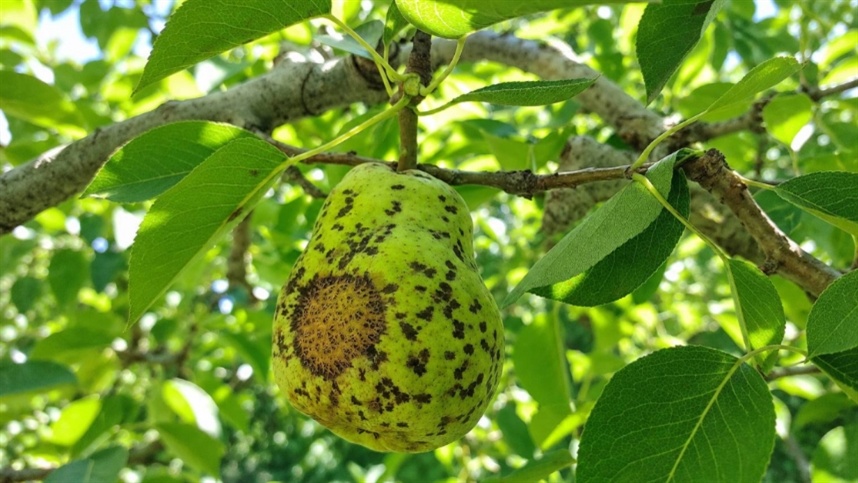
The combination of frequent rains and high humidity in the spring of 2026 increases the risk of disease in stone fruit and pome fruit orchards in the Alto Vale region of Río Negro, Argentina. According to information released by the National Institute of Agricultural Technology (INTA), experts recommend strengthening phytosanitary monitoring, especially in areas with a history of pear scab infections and other fungal diseases.
Between the end of September and the beginning of October, pome fruit trees go through sensitive phenological stages, in which persistent humidity can favor the development of pathogens. This scenario requires attention from producers to reduce the risks of infection and preserve the commercial quality of the fruit.
According to a report by INTA Alto Valle, humid conditions during flowering and petal fall can favor fungal infections such as Botrytis and Cladosporium. These pathogens can remain dormant and cause rot after harvest. “Humid conditions during flowering and petal fall can favor fungal infections such as Botrytis and Cladosporium, which can remain dormant and manifest as rot after harvest. Therefore, it is important to pay special attention to orchards with a history of these problems,” noted Jonatán Lago, an expert from INTA Alto Valle.
Another disease favored by climatic conditions is pear scab, caused by the fungus Venturia pyrina. Infection occurs when periods of rain or prolonged humidity coincide with temperatures favorable to the development of the pathogen.
The disease can affect leaves, flowers, and fruit. In pear trees, it causes dark spots and deformities, compromising the commercial quality of the produce.
The risk of infection depends not only on the accumulated rainfall, but also on the temperature recorded during the wet season. To monitor these conditions, INTA Alto Valle uses information from its network of meteorological stations to prepare phytosanitary bulletins that guide producers on the risk in different locations. “The records indicated a high risk of scab infection throughout the Alto Vale region, with homogeneous conditions across the area. Monitoring climatic conditions allows us to identify risk situations and adjust sanitary management strategies,” explained Marisa Aluminé Tudela, from INTA Alto Valle.
Flowers and young leaves are among the structures most susceptible to the disease. When infection occurs at this stage, it can damage developing tissues and lead to premature flower drop.
For susceptible pear varieties, such as Williams and Red Bartlett, experts recommend increased vigilance, especially in orchards with a history of scab.
In these areas, the recommendation is to apply systemic fungicides between 48 and 96 hours after the start of the rain, respecting the instructions for use of each product.
Since symptoms can take time to appear, monitoring of plants also needs to continue after periods of higher risk. According to technical information from INTA, the interval between infection and the appearance of the first signs varies from two to three weeks, depending on temperatures.
For this reason, experts recommend monitoring leaves and young fruits in early November, a period when symptoms may begin to become visible.
In addition to phytosanitary challenges, excess soil moisture can hinder operations within orchards. This condition reduces the ability of tractors to move around and can prevent machinery from entering to carry out necessary treatments. "Besides the phytosanitary risks," added Lago, "there are operational complications arising from high soil moisture, which makes it difficult for tractors to move around and for machinery to enter the orchards."
Given these difficulties, INTA is evaluating the use of drones as an alternative to support the application of pesticides. Because they are lightweight devices, they allow for targeted applications and can reduce machinery traffic in cultivated areas.
However, the adoption of the technology depends on evaluating the quality of the application and the effectiveness of the control, as well as compliance with technical recommendations and current regulations.
With conditions predicted to be favorable for the development of diseases, strengthening climate and phytosanitary monitoring is one of the main measures to guide management in the Alto Vale orchards during the spring.