 EN
EN  PT_BR
PT_BR Dried distillers grains, also known as "Distillers Dried Grains" (DDG), a byproduct of corn ethanol production, have been gaining increasing relevance in the Brazilian agro-industrial landscape by adding value to the corn supply chain and strengthening the agribusiness economy.
The growth of DDG (Dried Distillers Grains) follows the expansion of the corn ethanol industry in the state, which today concentrates a large part of the mills in operation in the country. This movement strengthens the integration between agriculture and livestock farming, offering producers a strategic alternative for animal feed with high protein and energy value, while also increasing the competitiveness of the production chain.
According to Lucas Costa Beber, president of the Mato Grosso Soybean and Corn Producers Association (Aprosoja MT), the opening of new markets and the consolidation of DDG as a commercial product reinforce the trend of increasing value for this co-product in the coming years.
“Last year, China opened its market to imports of Brazilian DDG, and I believe it will gain ground alongside soybean meal. There is a discussion about which will be the main Brazilian product in this scenario, and I believe this change is inevitable. The market and sustainability aspects must also be considered,” he emphasized.
The president also highlighted that the Brazilian production system, especially in Mato Grosso, has characteristics that make the corn and its derivatives chain one of the most sustainable in the world.
“Research shows that in the soybean-corn rotation system, there is a positive balance, with an average carbon sequestration of about 1.9 tons. Furthermore, soybeans, being a legume, perform biological nitrogen fixation, and about one-third of the nitrogen used by the crop comes from this process. In the case of corn, a large part of the nitrogen used is also benefited by this dynamic, which makes production, including corn ethanol, one of the most sustainable in the world, as well as the production of chicken and pork. Given this competition and market evolution, the trend is that, in the future, corn will gain even more relevance, especially in the production of cleaner and higher-quality fuels,” explained Lucas Costa Beber.
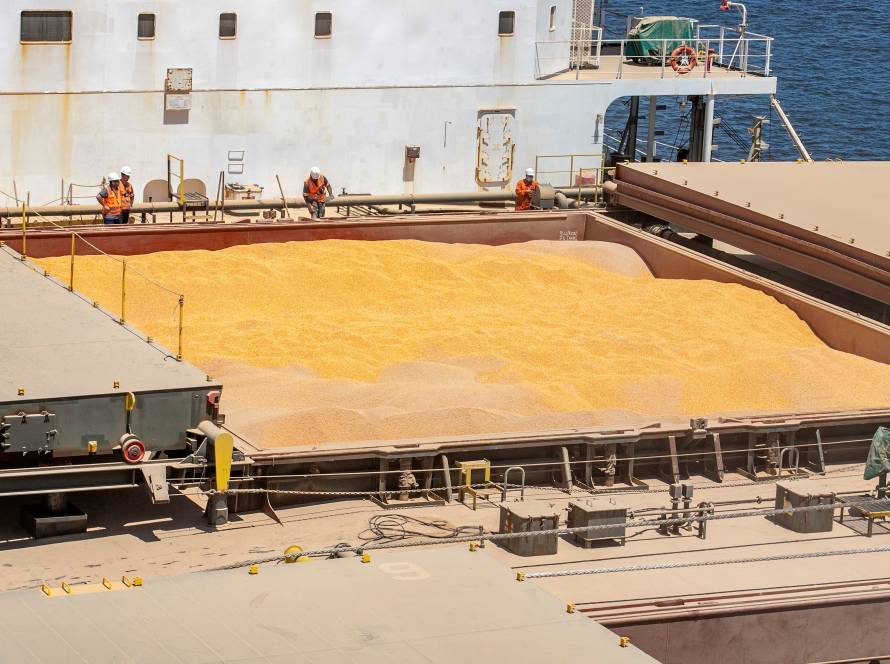
The sector already consumes around 20 million tons of corn per year to produce approximately 10 billion liters of ethanol, a volume that represents about a quarter of the entire national production of this biofuel. In Mato Grosso alone, the mills consume approximately 13.5 million tons of corn annually, demonstrating the importance of this industry to the regional economy.
According to Luiz Otavio Tatim, fiscal advisor for the Brazilian Association of Corn and Sorghum Producers (Abramilho), the advancement of DDG represents an important opportunity to diversify the corn production chain and increase value generation within rural properties.
“The growth of corn ethanol plants and DDG production in Brazil is very positive, especially for Mato Grosso. This movement has significantly increased the demand for the grain, contributing to greater stability in prices received by producers and reducing exclusive dependence on exports. Instead of exporting only raw materials, we are transforming corn into renewable fuel, animal protein, and regional development, generating jobs, income, and investments in the interior of the country. Corn ethanol contributes to a more sustainable energy matrix and to the reduction of emissions, showing that it is possible to reconcile food security, producer competitiveness, and energy transition for the benefit of the whole society,” he assessed.
Today, Mato Grosso already produces around 3 million tons of DDG per year, and the mills consume approximately 13.5 million tons of corn, consolidating a new economic dynamic for the sector. According to the advisor of Abramilho, DDG can increase the competitiveness of the corn chain and consolidate the state as a national reference in this market.
“This model adds value within the state itself, generates jobs, attracts investment, and reduces the need to transport inputs over long distances. The integration between agriculture, livestock, and bioenergy is one of Brazil's great competitive advantages. The producer ceases to depend exclusively on the sale of grain and begins to participate in a more diversified, resilient, and sustainable chain. We believe that Mato Grosso has all the conditions to consolidate itself as a national reference in this model, showing that it is possible to produce food, animal protein, and renewable energy in a complementary way, generating wealth for the interior of the country,” pointed out Luiz Otavio Tatim.
With the growing demand for co-products aimed at animal feed, DDG is consolidating itself as a strategic alternative for Mato Grosso's agribusiness. In addition to adding value to corn, the product strengthens the integration between agriculture and livestock farming, expands markets, and positions Mato Grosso as a protagonist in a chain increasingly aligned with productive efficiency and sustainability.