 EN
 PT_BR

The quotes for soySoybean meal and oil are operating in decline on the Chicago Stock Exchange this Wednesday (21), in a devaluation movement that affects the entire oilseed complex. According to an analysis by Grão Direto, the pressure on prices occurs even after the confirmation of a sale of soy from the United States to China by the US Department of Agriculture (USDA), released on Tuesday (20). Despite the operation, the market closed the previous session in negative territory, amid concerns about abundant supply.
Grainsights, the market intelligence arm of Grain Direct, points out that the scenario of pressured prices is also reflected in Brazilian negotiations. In Formiga, in the southwest of Minas Gerais, the soy FOB with reference to November 2026 closed Tuesday quoted at R$ 139.33 per sack, accumulating a drop of R$ 4.21 per sack for the week. Even with the devaluation, the market maintained a positive basis of R$ 0.55 per sack in relation to export parity.
Trading in the Brazilian physical market continues at a reduced pace, but shows differences between producing regions. A survey by Grainsights identified greater activity in southern Rio Grande do Sul, where producers conducted transactions even in the face of falling prices. In Minas Gerais, there were sporadic transactions in the Triângulo Mineiro and the southwest of the state, while São Paulo registered little activity. In Mato Grosso and Goiás, the market remained practically stagnant, with no significant volume of business.
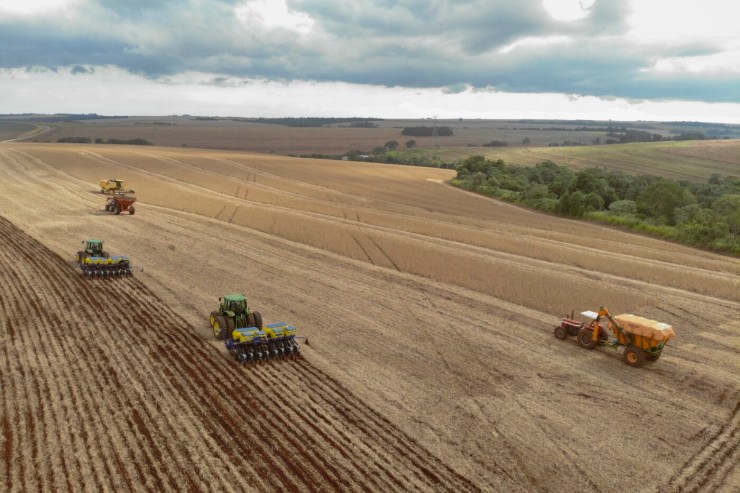
Besides price fluctuations, the progress of soybean planting in Brazil is noteworthy. Planting has reached 30.11 TP4T of the planned area, almost double the percentage recorded a week earlier and above the pace observed in the same period of 2025. The national scenario, however, presents regional differences. In Paraná, excessive rainfall has caused delays in fieldwork, with waterlogged soils hindering the entry of machinery and the continuation of planting in different locations.
In the international market, Grainsights' analysis highlights that Chinese purchases of US soybeans were not enough to support prices in Chicago. The simultaneous drop in prices for the grain and its derivatives occurs in an environment lacking positive news for the market. In Brazil, the devaluation of the exchange rate is also among the factors being monitored, at a time when producers are less willing to increase sales.
Another point of attention is the second round of the Brazilian presidential election, scheduled for Sunday (25). According to the analysis, the result could cause movements in the exchange rate and influence soybean export premiums. Meanwhile, trading remains limited in most of the monitored regions, with southern Rio Grande do Sul standing out for the highest activity and the Mato Grosso market showing low participation in negotiations.