 EN
EN  PT_BR
PT_BR 
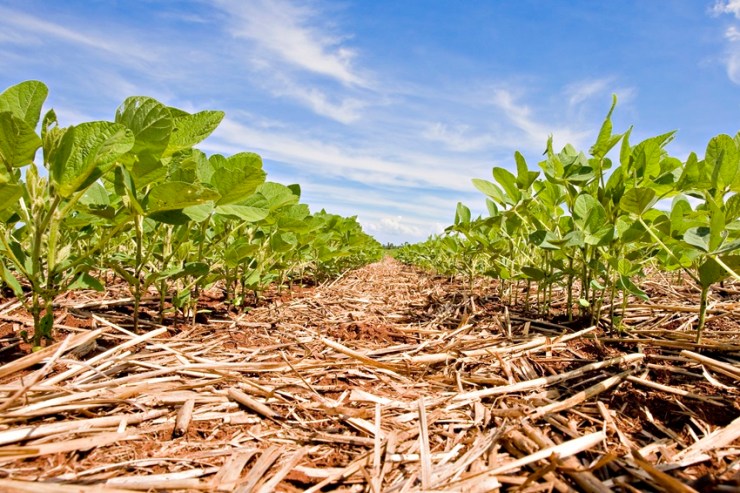
With the advancement of soybean planting in Mato Grosso, the Mato Grosso Soybean and Corn Producers Association (Aprosoja MT) is reinforcing the producers' attention to a crucial stage of the harvest: the evaluation of the stand immediately after plant emergence. This guidance is part of the Strong Seed program, which in its previous phase addressed seed care upon arrival at the farm and now supports the producer in the next stage, post-planting.
According to the Agricultural Defense Commission of Aprosoja MT, the productive potential of the crop begins to be defined as early as emergence, and evaluating the stand using a method is as important as choosing a good seed. For the vice-president of the Western region of the entity and vice-coordinator of the commission, Gilson Antunes de Melo, the distribution of plants in the field has a direct impact on the final result.
“Today we are talking about varieties with high yield potential, and the arrangement of the plants in the soil is extremely important. For this to happen, the seed has to germinate well. The seed you plant and the planting you do need to be of very high quality so that it emerges well, with proper distribution and without holes. The soybean plant has a compensatory potential up to a certain distance, but it doesn't compensate for holes,” he explains.
Among the commission's guidelines are verifying the uniformity of emergence, comparing the plant population with what was planned, and observing the presence of gaps or double plants. Before deciding on replanting, the recommendation is to weigh criteria such as the final population, the location of gaps in the area, and the available planting window. Monitoring should also be carried out at different points in the field, with periodic inspections.
Care is even more important this season, marked by uncertainty regarding rainfall patterns. "It's a season that requires a lot of attention, a lot of care, a lot of diligence, more so than in other years; sometimes it rains, sometimes it doesn't, so the producer has to be very attentive to avoid losses in their crop," says Gilson.
In Nova Mutum, the delegate of the Aprosoja MT branch, Arthur Favretto, says that planting began on September 7th, after a rainfall of 90 millimeters. “We started by planting 300 hectares. It hasn't rained since, but we had good soybean emergence, a good crop stand, and we only needed to replant where there was a mechanical failure of the planter,” he reports.
Through the Semente Forte program, Aprosoja MT reinforces that the quality of the seed verified before planting is reflected in the establishment of the crop, and that producers can contact the entity's supervisors to carry out sampling and collection of seed lots for evaluation in an accredited laboratory.
The commission's message is that a good harvest begins with a good assessment, and that decisions made at the right time help protect investment and the productive potential of crops.