EN
EN  PT_BR
PT_BR 
The characteristics of beanFactors such as yield potential, plant architecture, and branching help the producer identify limitations and adjust management throughout the cycle. Field evaluation, especially during flowering and grain filling, allows for estimating crop performance and comparing cultivars and management strategies.
The common bean (Phaseolus vulgaris L.) exhibits great variation in architecture, branching capacity, and yield potential. These characteristics are determined by the interaction between genetics, environment, and management. The crop is cultivated practically year-round, with different sowing times, such as rainy, dry, and winter seasons, depending on the region. Cultivation can occur under both rainfed and irrigated conditions.
Therefore, considering only the average historical productivity of the property may not represent the potential of each plot. Visual and quantitative assessment of the crop allows for the identification of problems with stand establishment, nutrition, water availability, pests, and diseases.
Among the main components that determine productive potential are the number of plants per meter, stand uniformity, productive branches, fertile nodes, flowers, pods, grains per pod, and grain weight. During the vegetative phase, leaf and branch emergence defines branching and the leaf area available for photosynthesis. At flowering, the potential number of pods is determined, while grain filling directly influences the final weight of the production.
Bean plant branching
Branching is the plant's ability to produce lateral branches from the main stem. These branches can be purely vegetative or have a productive function, with fertile nodes, flowers, and pods.
This characteristic varies between cultivars and is also influenced by spacing, sowing density, soil fertility, water availability, and the amount of light received by the plant. A greater number of productive branches can increase the production potential per plant under favorable conditions. Branching also contributes to faster row closure, reducing soil exposure and weed emergence.
On the other hand, an excess of long, weak branches can increase the risk of lodging. In very dense crops, excessive branching can also hinder air circulation and increase humidity in the lower part of the plants, favoring fungal diseases. Thus, the goal is not simply to seek the greatest possible branching, but to balance the number and vigor of branches, plant size, and population per area.
How to measure the productive potential of beans
The evaluation can begin by dividing the plot into representative areas, considering borders, the center of the field, lower-lying areas, and locations with different soil characteristics. Within each strip, three to five sampling points can be randomly selected. Each point can use one row meter as the unit of evaluation.
The first step is to count the number of plants per meter and compare the result with the desired plant stand for the cultivar. It is also important to observe the uniformity of height and vigor.
Significant differences between plants may indicate problems with emergence, compaction, waterlogging, or uneven soil fertility. From full flowering onwards, when approximately 50% of the plants have open flowers, the evaluation can be more thorough. The procedure considers 10 plants per sampling point.
In each plant, the productive branches, fertile nodes, and the number of flowers or small pods on representative branches should be observed. This information allows for an estimation of the potential number of pods per plant. However, not all flowers develop into pods, as factors such as water deficit, excessive heat, nutritional deficiencies, pests, and diseases can cause abortion.
Pod formation determines crop performance.
During the grain-filling stage, when most of the pods are already formed and growing, the evaluation focuses primarily on the structures that can effectively contribute to production.
In 10 plants from each point, the producer or technician can count the well-formed green pods, discarding very small or delayed structures that will hardly contribute to productivity.
It is also possible to count the grains in representative pods. The material indicates that this number typically varies from three to seven grains per pod, depending on the cultivar. The presence of empty, malformed, or pest-infested pods should also be recorded. By combining the number of pods, the grains per pod, the stand, and the average grain weight, it is possible to arrive at a rough estimate of the yield potential.
Bean architecture influences management.
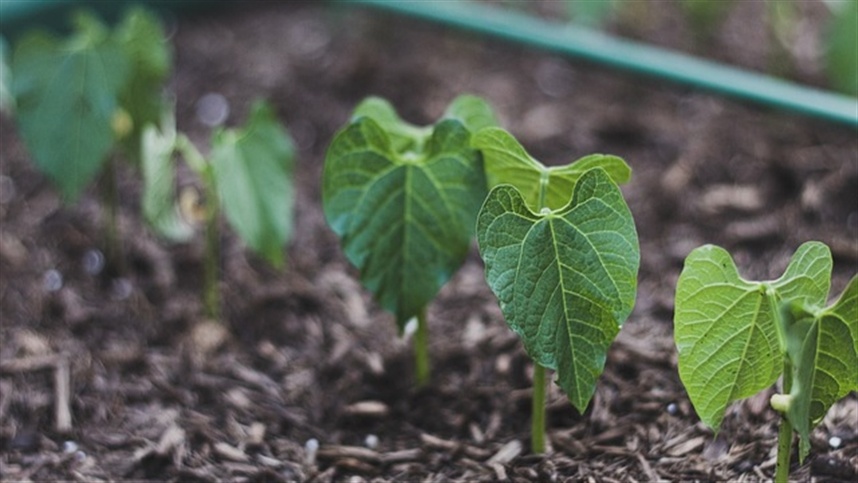
Size and growth type are other important characteristics for evaluating the crop. In simplified terms, bean plants can have an erect, semi-erect, or prostrate shrub architecture.
Upright shrub types tend to form more compact plants with less branching, characteristics that facilitate mechanical harvesting and can reduce the risk of lodging. Semi-erect types have lateral branches and an intermediate size, combining productive potential and relative ease of management.
Prostrate or creeping varieties produce many long branches that can lie flat on the ground. Although they may have a higher yield potential per plant, they are also more susceptible to lodging, soil-borne diseases, and difficulties during harvesting. The predominant pattern should be observed while walking through the plot. Mixtures of cultivars or differences in planting density can cause variations in plant size within the same area.
Counting branches helps identify branching.
To assess branching, it is recommended to observe not only how many branches the plant has, but also the distribution and vigor of these structures. In 10 plants per sampling point, count the lateral branches with productive function, that is, those that have nodes with flowers or pods. The average number of productive branches per plant should be recorded for each area of the plot. It is also important to check whether the branches are short and well inserted or long and lying on the ground.
Repeating this evaluation between sowing times or in plots subjected to different management practices allows for comparison of plant behavior. These records can help in the selection of cultivars and in defining practices for future crops.
Closing the gaps requires balance.
Rapid row closure is a desirable characteristic because it reduces weed emergence, helps retain soil moisture, and alters the crop's microclimate. However, excessive shading and reduced air circulation can promote certain diseases.
Therefore, the producer should observe how long it takes for the crop to cover the soil after emergence. More branched plants tend to close the inter-row spaces more quickly. In hot and dry environments, this characteristic can be advantageous. However, in more humid regions with a history of foliar diseases, greater care is needed regarding sowing density and phytosanitary management.
Camping can compromise the harvest.
The risk of lodging should be assessed especially after strong winds or heavy rain. Plants that are leaning or completely flattened indicate that greater attention should be paid to the crop architecture.
In taller cultivars with extensive branching, it is also important to check the strength of the main stem and branch insertions. Thin and long stems can increase the tendency for lodging. When lodging occurs, mechanical harvesting becomes more difficult, grain losses may increase, and the environment near the plants may become more favorable to pod and grain diseases.
Climate affects the productive potential of beans.
Beans can be sown from January to December, depending on the region, water availability, and temperature. The planting season directly influences plant development, branching, and productivity. Very high temperatures during flowering increase flower abortion and can reduce the number of pods. Milder conditions tend to favor grain formation and filling.
Photoperiod can also influence some cultivars, although the common bean is relatively insensitive to day length. Changes may slightly affect the plant cycle and architecture.
Water availability is another determining factor. Under water deficit, the plant tends to produce fewer branches and fertile nodes, and may exhibit shorter height and less branching. Under conditions of high fertility and good water availability, well-nourished and irrigated plants tend to produce more branches. Depending on the cultivar, however, this can also increase the risk of lodging.
Assessment guides management decisions.
The assessment of productive potential and branching should not only serve to count structures. The results can guide management decisions even during the cycle. Crops with very low branching, small leaves, and pale coloration may present nutritional or water limitations. In these cases, soil and leaf analyses help to complement the diagnosis. During flowering and grain filling, the occurrence of flower abortion and malformed pods can assist in evaluating irrigation management, when this resource is available.
The level of ground cover also helps define the need for weed control. Areas with little branching and more exposed soil may present greater competition with invasive plants. For future crops, comparing cultivars in test strips within the property allows recording differences in plant size, branching, and pod formation throughout the cycle.
Bean characteristics should be monitored with technical support.
Visual and quantitative assessment of bean plants is an important tool, but it does not replace soil and leaf tissue analysis, nor systematic monitoring for pests and diseases.
Productivity estimates based on pod and grain counts per plant are also approximations and should be interpreted with caution, especially in uneven crops. Monitoring by an agricultural engineer allows for the integration of information observed in the field with climate data and research recommendations, contributing to more precise management decisions.
According to the references presented in the material, studies on the improvement, management, growth, development, and architecture of the common bean plant help to support the evaluation of these characteristics in the crop.
What to look for in beans before estimating productivity.
To assess productive potential and branching, the producer must monitor the stand, plant uniformity, number of productive branches, fertile nodes, flowers, pods, and grains. It is also necessary to observe the cultivar's size, row closure, lodging resistance, and the plants' response to water, temperature, fertility, and management conditions.
Recording this information across different growing seasons allows for the comparison of genetic materials and management strategies, as well as the identification of recurring limitations within the farm.
The references cited in the content include works by Abreu, Ramalho and Santos on common bean breeding; studies by Arf and colleagues on crop management; the Embrapa Feijão publication: genetic improvement in Brazil; the work of Stone and Moreira on growth and development; and a study by Valentini and colleagues on plant architecture and productivity.