 EN
EN  PT_BR
PT_BR 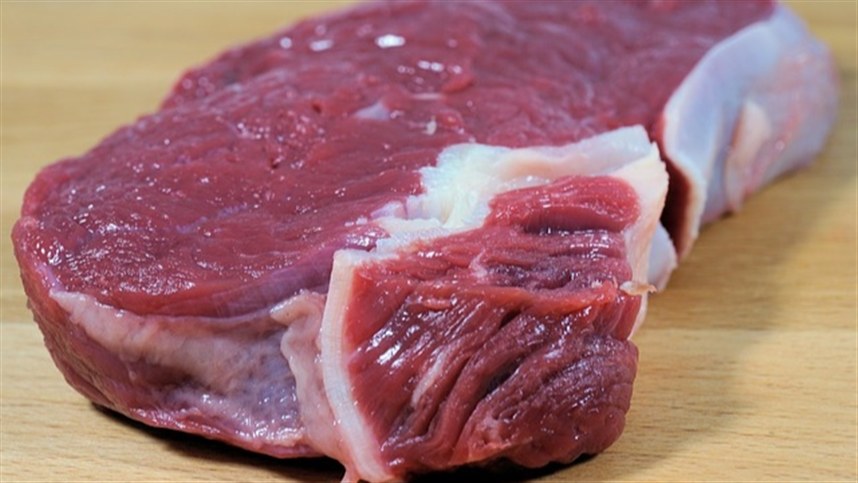
Brazilian beef exports began to feel the effects of the exhaustion of China's import quota in July, the main destination for the national product. According to data from Secex compiled by the Brazilian Association of Meatpacking Plants, ABRAFRIGO, the scenario is particularly worrying for Pará, which does not have access to relevant markets such as the United States, Chile, Mexico, and the European Union.
The impact was evident in the July figures. According to data released by ABRAFRIGO, based on information from Secex, Brazil exported US$1.63 billion in beef and beef products in the month, a decrease of 5.61% compared to July of the previous year. In volume, 308,200 tons were shipped, a decrease of 16%. The movement was even more intense in fresh beef, responsible for 9% of the sector's export revenue. Sales totaled US$1.447 billion in July, a decrease of 5.7%, while the volume shipped fell 17.5%, to 227,890 tons.
The reduction in Chinese purchases had a significant impact on this performance. According to data compiled by ABRAFRIGO, revenues from sales of fresh beef to China fell 39.61% in July, to US$529.24 million. The volume shipped to the Chinese market fell 47.81%, reaching 82,700 tons.
With Brazil's quota practically exhausted, exporters' concerns are turning to the remaining months of 2026. The situation is considered more delicate for meat processing plants located in states that have few alternatives for redirecting production destined for the Chinese market.
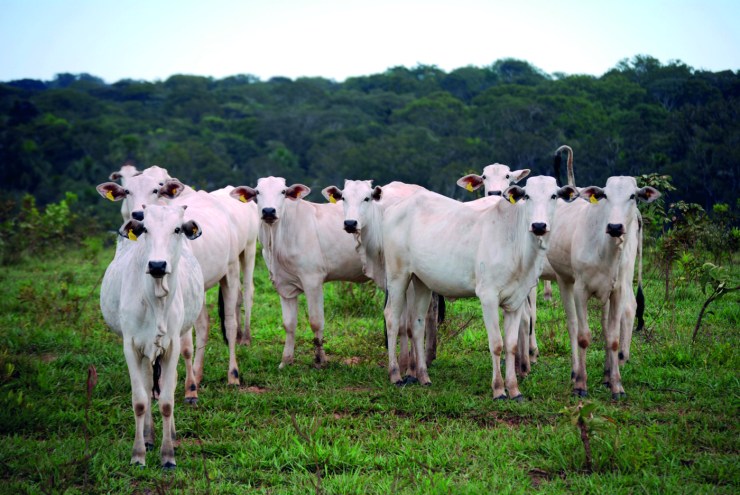
Pará is among the main cases. According to a survey by ABRAFRIGO, the state has the second largest cattle herd in Brazil, with 25.56 million head, second only to Mato Grosso, which has 32.85 million. Despite this, Pará occupies only the fourth national position in slaughter and the seventh position in beef exports.
According to the assessment presented by ABRAFRIGO, the numbers show that the export performance of Pará state is below the potential represented by the size of the livestock herd. The organization points to impacts on income generation for rural producers, meatpacking plants, and services linked to the production chain, as well as effects on state and national tax revenue.
The Chinese restriction could worsen this situation during the second half of the year. Some of the meat that would no longer be sent to China could be redirected to other countries or the domestic market, but, according to ABRAFRIGO, there are no alternatives capable of fully absorbing the surplus production of the country's second-largest cattle herd.
The association also highlights that Pará, like the rest of Brazil, is recognized as a foot-and-mouth disease-free area without vaccination. Therefore, ABRAFRIGO argues that the state should be treated as a priority in negotiations for authorization to access the main markets that buy Brazilian meat.
Despite the drop observed in July, the accumulated performance for 2026 remains positive. According to data released by ABRAFRIGO, between January and July Brazil exported 2.119 million tons of beef and beef products, a growth of 3.11% compared to the same period in 2025. Revenue increased by 26%, reaching US$11.56 billion.
China remains the main buyer. In the first seven months of this year, the Asian country imported 857,240 tons, an increase of 8.51% of the total, and spent US$5.346 billion, a value 30.95% higher than that recorded in the same period last year.
According to ABRAFRIGO, China accounted for 46.26% of the sector's total export revenue between January and July. Considering only fresh beef, the Chinese share reached 50.75% in value purchases and 49.76% in volume.
There was also an increase in prices. The average value of meat destined for the Chinese market rose from US$5,166 per ton in 2025 to US$6,238 per ton in 2026, an increase of 20.76%. According to ABRAFRIGO, this movement reflects the increases in beef prices in Brazil.
While sales to China are limited by quotas, other markets have increased imports. The United States, the second largest destination for Brazilian beef, increased its spending on fresh beef by 48% between January and July, to US$1.276 billion. In volume, shipments to the United States grew by 23.9%, reaching 209,640 tons. The average price rose from US$5,092 per ton in the first seven months of 2025 to US$6,086 in the same period of 2026, an increase of 19.5%.
In July alone, Brazilian sales of fresh beef to the American market increased by 127.71 TP4T in value, reaching US$160 million. Volume grew by 105.81 TP4T, to 26,000 tons. According to information presented by ABRAFRIGO, the outlook for the American market remains favorable given an estimated supply deficit of 2.64 million tons in carcass weight equivalent for 2026.
The association's material also reports that the Trump administration recently announced a plan to import 300,000 tons of beef free of the 26.4% import tax. The criteria for the purchases are still pending the publication of an executive order. If Brazil is included, Brazilian beef could gain competitiveness and expand its presence in that market.
This possibility, however, would not reach Pará as long as the current trade restrictions on the product originating in the state remain. Chile and the European Union appear next among the main destinations for Brazilian fresh beef. According to data released by ABRAFRIGO, Chile moved US$539 million in purchases between January and July 2026, a growth of 45.86%. In volume, it was 88.9 thousand tons, an increase of 30.64%.
For the European Union, revenue increased by 21.8%, to US$480.4 million, while volume advanced by 9%, reaching 52,400 tons. The average selling price to the European bloc rose by 11.7%, to US$9,163 per ton. However, the European market is also a cause for concern. According to ABRAFRIGO, Brazil may face difficulties accessing the European Union from September onwards if there is no consensus in negotiations related to the certification of antimicrobial-free production, required by the bloc.
Russia, the fifth largest destination for Brazilian beef, also increased its purchases. Revenues increased by 43,83%, reaching US$317.4 million, while volume advanced by 31%, to 62,340 tons.
The numbers reinforce another point of concern raised by ABRAFRIGO: the concentration of Brazilian exports in a few buyers.
Between January and July 2026, China, the United States, Chile, the European Union, and Russia accounted for US$7.957 billion in purchases of fresh beef. This value corresponds to 75.56% of Brazilian revenue from the product. In volume, the five markets purchased 1.27 million tons, representing 73.4% of total revenue.
According to the association, this dependence becomes more relevant in the face of wars, tariff disputes, and other geopolitical problems capable of raising costs and increasing instability in the international market. The effect tends to be more noticeable in states that, in addition to the concentration of destinations, also face barriers to accessing important markets.
Even with this scenario, the buyer base expanded in most destinations. According to data released by ABRAFRIGO, 116 countries increased their imports of Brazilian beef between January and July, while another 60 reduced their purchases.
For Pará, however, the progress in different destinations does not eliminate the main challenge posed by the exhaustion of the Chinese quota. With one of the largest cattle herds in the country and restricted access to relevant buyers, the expansion of international authorizations becomes even more important for the performance of the state's livestock chain in the second half of the year.