 EN
EN  PT_BR
PT_BR The estimate for Brazil's 2025/26 soybean crop has been raised to 184.7 million tons, a growth of 6.71 TP4T compared to the previous cycle and 0.91 TP4T over the last revision, after the consolidation of the final data from the soybean stage of the Crop Rally, according to Agroconsult. The new figure reflects adjustments in both productivity and planted area, reinforcing the scenario of another large harvest in the country.
The revision comes after the completion of two main surveys: the field survey, conducted by the Rally da Safra teams, and the planted area survey, based on satellite images from the Cropdata tool. With approximately 1,700 crops evaluated in 14 states and more than 60,000 kilometers traveled since January, the national productivity was adjusted from 62.5 to 62.7 sacks per hectare.

Regarding the area, the reading indicates 49.1 million hectares planted with soybeans, an increase of almost 300,000 hectares compared to the initial Rally projection. With this, the total adjustment for the 2025/26 crop compared to the previous estimate reaches 1.6 million tons and, compared to the previous season, exceeds 11.5 million tons: 30% of this growth is due to the increase in area and 70% due to productivity gains.
“We have reached a decisive moment for defining the soybean harvest. This is when we consolidate the field data collected in all regions of the country, respecting the harvest calendar of each area, and integrate it with the planted area information, obtained with the support of advanced image processing technologies. This cross-referencing of information significantly increases the accuracy of the estimates and reinforces the reliability of the national production figures,” says André Debastiani, general coordinator of the Harvest Rally.
Among the positive highlights of the harvest are Mato Grosso and Bahia. With the harvest completed, Mato Grosso is expected to produce 51.3 million tons, maintaining productivity at 66 sacks per hectare, stable compared to the previous report and slightly above the initial estimate of the Rally, which was 65 sacks. “At the beginning of the Rally, the early crops in Mato Grosso already indicated high productive potential. In February, excessive rainfall raised concerns about the quality and weight of the grains. Even so, the final data show that the state sustained high productivity, supported by a higher number of grains per hectare and good grain weight,” explains Debastiani.
In Bahia, with 61% of the harvested crop, field data confirms one of the largest positive revisions of the season. The estimated productivity, which was 66 sacks per hectare in January, rose to 68 in February and is now estimated at 70.3 sacks per hectare, the highest in the country. State production is expected to reach 9.7 million tons.

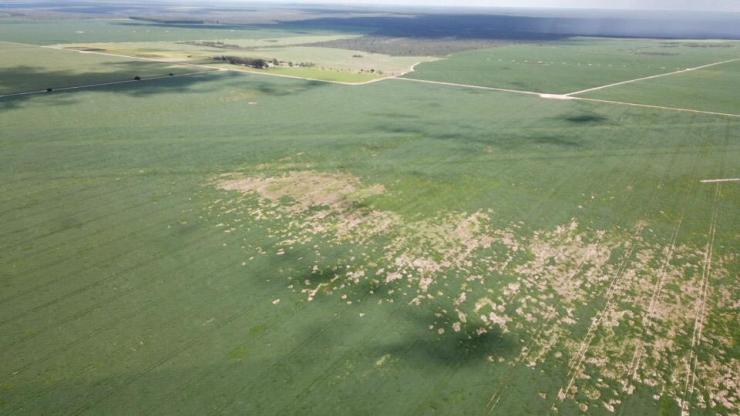
Rio Grande do Sul stands out negatively. With only 11% of the area harvested – a rate lower than the average of the last five harvests – the state suffered from drought throughout the cycle. The productivity estimate in January, which was 52 sacks per hectare, fell to 47 sacks in February and was adjusted to 48.3 sacks in the final round. “Despite the improved perception of the state's potential, after touring the state at the end of March, production should still be slightly below 20 million tons,” points out Debastiani.
Among the other states, there were some reductions in estimates in the final third of the harvest, due to specific weather challenges. In Mato Grosso do Sul, the start of the harvest showed satisfactory planting, but irregular weather was constant throughout its development. Reduced rainfall and high temperatures accelerated the harvest, amid concerns about the second crop window, and productivity was revised from 62.5 to 60 sacks per hectare.
In Goiás, the harvest developed satisfactorily, but the grain weight and quality were below expectations. Productivity was reduced from 67 to 66.2 sacks per hectare in the state.

In Paraná, irregular rainfall and high temperatures mainly affected the last areas sown in February and March, reducing grain weight. The estimate went from 67 to 66.1 sacks per hectare.
Other states have already shown positive revisions. In Minas Gerais, the combination of factors such as sowing, which despite delays occurred safely without the need for replanting, coupled with a good level of investment in crops and adequate rainfall throughout the crop's development, resulted in a record productivity in the state of 68 sacks per hectare.
In Mapitopa, Maranhão and Piauí showed good grain weight in practically all regions, which increased productivity in Maranhão to 64.2 sacks, and in Piauí, now with 65 sacks per hectare. In Tocantins and Pará, the averages should remain close to 60 sacks per hectare.
Second corn crop
With the soybean stage concluded, the Rally now turns its focus to the second corn crop, which is developing under a higher level of climate risk in some states. Between May 10th and June 15th, technical teams will be in the field to assess crops in the states of Mato Grosso, Mato Grosso do Sul, Goiás, and Paraná. The area estimated by Agroconsult is 18.5 million hectares, a growth of 2.5% compared to the previous cycle.
Average productivity is still estimated within the trend line – at 103.1 sacks per hectare – with a total production of 114.5 million tons, which would correspond to a decrease of 7.61 TP4T compared to the previous harvest. “What will define the productive potential is the weather behavior in April. Despite the rains in March and the good soil moisture levels, the climate models diverge,” says Debastiani, emphasizing: “While the European model indicates more consistent rainfall, the American model projects below-average volumes, which keeps the level of uncertainty high.”
According to him, crops in states like Goiás depend on rainfall in April and the first half of May, while in Mato Grosso, the need for precipitation is concentrated throughout April to ensure the proper development of crops.