 EN
EN  PT_BR
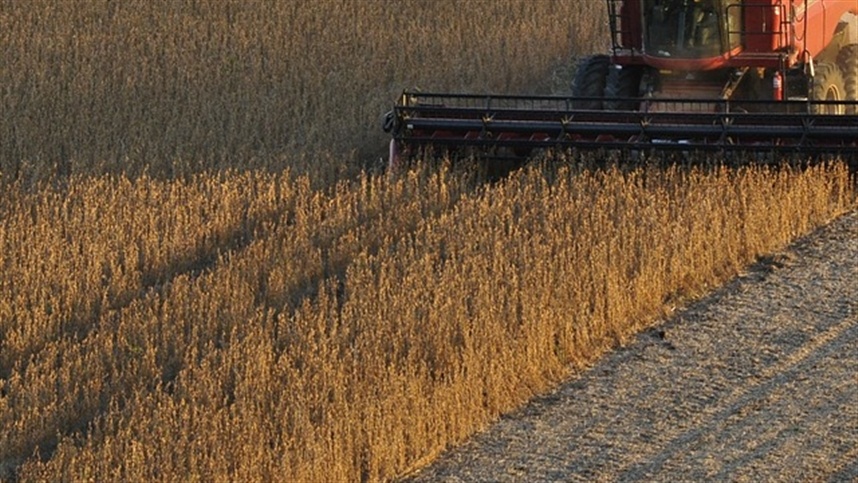
PT_BR The soybean harvest in the Eastern Region of Paraguay is complete, reaching 100% of the area, according to a StoneX report. Soybean production in the Chaco region is still developing due to a different production calendar, conditioned by climatic factors different from the other half of the country.
However, since approximately 97% of national production is concentrated in the Eastern Region, the cycle analysis focuses on the final results observed in that region. “Initially, there were concerns about a possible drop in productivity due to warmer and drier weather conditions. However, these did not materialize into significant losses. The rains, although irregular, occurred at key times and allowed the productive potential to be sustained,” explains Larissa Barboza Alvarez, Market Intelligence Analyst at StoneX.
Furthermore, the crops were already in advanced stages of development when the most adverse conditions were recorded, which limited their impact on final yields, although it did cause some delays in the off-season planting schedule.
Thus, according to her, the generally adequate water conditions ended up consolidating a historic cycle, which stands as the largest main soybean harvest ever recorded in Paraguay. At the regional level, as the analyst explains, more significant positive adjustments were observed, especially in the north of Alto Paraná, from Ciudad del Este upwards, as well as in Canindeyú.
Nevertheless, good yields were widespread, including in Itapúa, Caaguazú, Guairá, Caazapá, San Pedro, Amambay, and Concepción. On the other hand, although no adjustments were made in Misiones and Paraguarí, it is important to highlight that these regions already showed higher productivity compared to more sensitive areas. “Based on the previous estimate of 10.4 million tons in March, the new April update incorporates a positive adjustment that raises the main crop production to 10.9 million tons. The performance of the second crop remains to be determined, but if it reaches 1.4 million tons, the country's total production could reach 12.29 million tons, establishing a new historical record for Paraguayan soybeans,” stated the analyst.


Regarding the second crop, Larissa points out that the crops compete directly for land, especially between soybeans and corn. In the case of corn, much of the planting was done outside the ideal window, mainly in the south-central region, which includes Caaguazú and extends from Ciudad del Este to Naranjal.
As a consequence, the harvest is expected to be concentrated from mid-July onwards, with no significant supply prospects in June. The second soybean crop (safrinha) presents a more stable condition, with harvesting expected between the end of April and mid-May, in line with the Argentinian calendar. It is still too early to make productivity adjustments in this second cycle.

Marketing

Larissa Barboza Alvarez, Market Intelligence Analyst at StoneX: “For the 2026 second crop, advance sales are also showing dynamism, reaching 22%, compared to 14% in the previous month and above the average of 17%, which confirms a more active commercial stance on the part of producers in this exceptional cycle.”
According to the analyst, the basis has shown strong recent volatility in the market. Initially, there was a drop driven by the rise in Chicago, following signs of a possible increase in Chinese demand resulting from political announcements, coupled with the impact of the conflict in the Middle East, which raised oil prices and, by correlation, biofuel prices. “In this context, the basis in Asunción went from levels close to US$ -45/ton before these events to US$ -80/ton at its lowest point, subsequently recovering to US$ -55/ton. This movement is mainly explained by the rise in international prices, while the flat price remained relatively stable, in a scenario also marked by high seasonal supply and strong trading flow,” she points out.
Regarding sales, the progress is significant and reflects both the good productive performance and the financial needs of the sector in a context of high grain availability. Soybeans from the 2025/26 crop reached 68% in sales, well above the 48% recorded in the previous month and the historical average of 63%.
In the corn sector, the 2025 harvest is practically complete, with 971 TP4T sold, in line with the average of recent years. "For the 2026 second crop, advance sales are also showing dynamism, reaching 221 TP4T, compared to 141 TP4T in the previous month and above the average of 171 TP4T, which confirms a more active commercial stance on the part of producers in this exceptional cycle," emphasizes Larissa.