 EN
EN  PT_BR
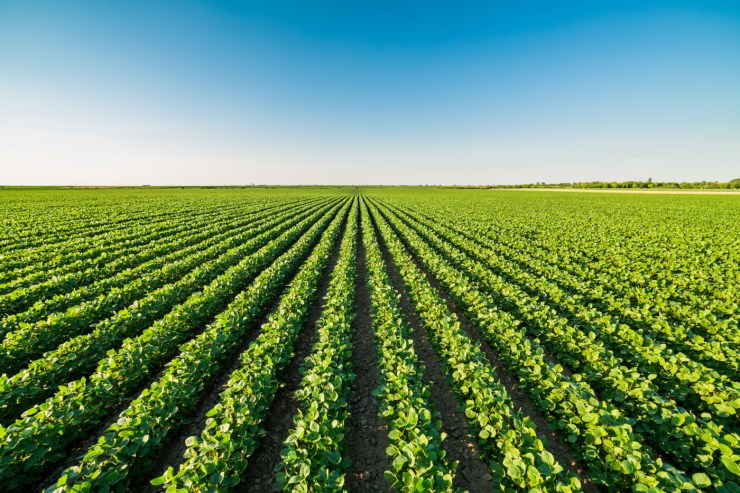
PT_BR Sustainable technologies for low-carbon soybean production are the highlight of Embrapa Soja's presentation at AgriZone, a showcase of technologies, science, and international cooperation focused on sustainable agriculture and combating hunger, hosted by Embrapa at Embrapa Amazônia Oriental in Belém (PA), from November 10 to 21, during the 2025 United Nations Climate Change Conference (COP30). “Brazil is making strong progress on the agenda of solutions for climate transition and food security. One of the highlights is the Low-Carbon Soybean Program initiative, which is developing a voluntary certification protocol, from a sectoral innovation perspective, that values soybeans produced in production systems that contribute to reducing greenhouse gas emissions while adopting more resilient production techniques for climate change scenarios,” explains Carina Rufino, head of technology transfer at Embrapa Soja.

Photo: Shutterstock
During COP30, researchers from Embrapa Soja will be demonstrating, in practice, aspects of the guidelines and protocol of Low Carbon Soy CertificationThe project is showcased at Embrapa's Low Carbon Programs Showcase, on the Álvaro Adolfo farm, one of the central areas of AgriZone, featuring sustainable intensification practices and diversification of production systems. “The initiative will allow producers who adhere to the certification to attest to the sustainability of the soybeans produced, through a Brazilian methodology being developed with scientific parameters and adapted to the reality of tropical agriculture, making tangible the qualitative and quantitative aspects of the grain, produced with technologies and agricultural practices that reduce the intensity of greenhouse gas (GHG) emissions,” explains Roberta Carnevalli, head of research and development at Embrapa Soja.
Embrapa's estimate, based on historical data obtained from experiments conducted over 30 years, shows that adopting the practices recommended in low-carbon soy certification can reduce greenhouse gas emissions by approximately 301 tp/t. Considering the carbon removed from the soil, the reduction can reach 601 tp/t. Production systems involving soy as the main crop and crops in succession or rotation, such as wheat, millet, corn, corn-brachiaria, and pasture, will be on display. The showcase will feature various cover crops that can be incorporated into crop diversification systems (crotalaria, pigeon pea, stylo, brachiaria ruziziensis, sesame, cotton, rice, cowpea, forage turnip, millet).
Visitors will also be able to learn about other certification initiatives developed by Embrapa, as well as see the benefits of crop diversification for soil health. The technological showcases are excellent opportunities to observe the aerial parts of the plants, but Embrapa Soja also intends to show what is inside the soil, combined with the inoculation process using bio-inputs. To this end, a panel was set up with the roots of six plant species: soybean, corn, sorghum, panicum, brachiaria brizantha, and brachiaria ruziziensis. These crop diversification alternatives increase the quality of the no-till system, soil quality, and consequently, soybean productivity.
Agrizone Panel
Embrapa Soja will also host the panel "Low Carbon Soybeans: Foundations for a Resilient and Sustainable Tropical Agriculture" during COP 30, on November 13th at 4:40 PM, in the Agrizone Exhibition Pavilion. The Low Carbon Soybean Program adopts a sectoral innovation model and has the partnership of seven supporting companies: Bayer, Bunge, Cargill, Coamo, Cocamar, GDM, and UPL. On this occasion, the English version of the publication "Technical guidelines for Low Carbon Soybean certification – first approach" will be launched; access it by clicking [here]. here.
Bioinputs
The inoculants developed by Embrapa Soja with partners will also be part of Embrapa's portfolio of bio-inputs at COP30. The proposal is to present inoculants for soybean, bean, corn, and pasture crops.
ZarcNM
The ZARC Management Levels (ZarcNM) is another solution that will be highlighted among Embrapa's launches in 2025. With a pilot project in Paraná, in the 2025/26 crop season, the Agricultural Zoning of Climatic Risk (Zarc) for soybean cultivation will also consider the adoption of good soil management practices that increase the volume of water available to plants. Producers who join the project will have access to differentiated subsidy percentages in rural insurance policies, according to the management level adopted on the property. The innovation of the proposal from the Ministry of Agriculture and Livestock (Mapa) and Embrapa in the Zarc Management Levels aims to contribute to mitigating the climatic risks faced by soybeans.
Food and Nutritional Security Panel
On November 14th, from 4:30 PM to 6:00 PM, there will be a panel discussion titled “Food and Nutritional Security: The Role of Brazilian Science in Combating Hunger,” organized by Embrapa, the Brazilian Academy of Sciences, and the Peabiru Institute. During the panel, the English version of the book of the same name, organized by researcher Mariangela Hungria in partnership with authors from various organizations, will be launched. The publication is edited by the Brazilian Academy of Sciences.