 EN
EN  PT_BR
PT_BR Last week, the World Meat Congress held in Cuiabá (MT) discussed the main issues and demands related to the global animal protein market. Topics such as sustainability, taxation, animal welfare, carbon and methane emissions in livestock farming, the importance of meat consumption for human health, and the communication challenges of the livestock sector were discussed among Brazilian and international experts at the event, which included lectures, technical panels, and visits to slaughterhouses and farms.
Furthermore, the exchange of information and experiences with representatives from the approximately 20 countries present at the congress allowed Brazilian producers and entrepreneurs to better understand the particularities of the meat sector in each nation. “It was a great exchange of information. Brazilian producers understood the problems of other countries in relation to sustainability, and these countries were also able to learn about what we do, especially in Mato Grosso, to produce sustainably,” assessed the president of the Mato Grosso Meat Institute (Imac) and host of the event, Caio Penido.

Penido highlighted that the WMC was a great opportunity for Brazil to demonstrate to other countries its organization and the sustainability actions it practices, emphasizing the need for better communication to dispel the myth that the growth of national livestock farming compromises the environment. “Approximately 90% of our energy matrix is renewable, we have the greatest biodiversity on the planet with almost 66% of territory designated for conservation, and a tropical climate and production system that provides low-carbon meat. But even so, the target doesn't leave our shoulders. The fossil fuel lobby is very strong and ends up focusing attention on livestock farming and forests. At IMAC, we strive to communicate well, but it is a huge challenge to break through the bubble and engage with the urban population,” he stressed.
The president of IMAC added that other countries have also faced similar problems regarding sustainability, emphasizing that each has its own particularities. "There are many issues that cut across all countries, among them the difficulty of communicating better," he noted.
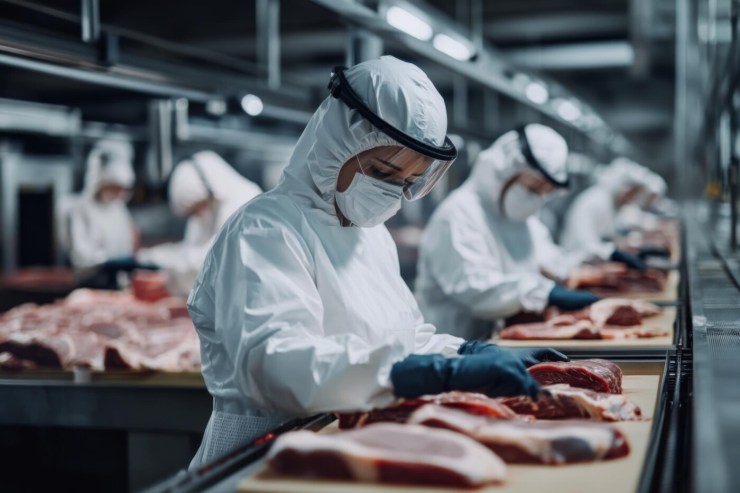
The global event could generate economic benefits for Brazil and, especially, for Mato Grosso, since the delegations learned about the entire meat production process, from cattle raising to export. This could open the Brazilian meat market to countries with which there are no trade agreements yet, in addition to expanding existing relationships. “The Congress can have the power to transform the perception of Brazil. Indirectly, it can even open new markets. It's a seed we are planting,” Penido emphasized.
The World Meat Congress brought together more than 600 people involved in the global meat market. The event is promoted by the International Meat Secretariat (IMS) and organized by IMAC.
Held every two years, the congress took place in Brazil for the second time. Mato Grosso, the country's largest cattle producer with 34 million head, was chosen to host the meeting of the main representatives of the global animal protein market.
According to the president of IMS, the Argentinian Juan José Grigera Naón, the event was an important space for exchanging information and integrating the entire meat market. “As these events take place, a new network is established in relation to previous ones. New perspectives also emerge, in a positive aspect, regarding best practices and what still needs to be improved,” he analyzed.
Naón also highlighted that bringing together all the players in the meat market at a single event allows for a transparent presentation of the entire production and commercial process. “These are people from about 20 countries who were able to follow the entire process, without interference, without manipulation, without lies. They are seeing how the entire production is done, from the farmer, through transportation, to export,” he noted.
The next edition of the World Meat Congress will be held in Ireland. The host city is yet to be determined by the IMS.