 EN
EN  PT_BR
PT_BR Exports of products affected by the US tariffs fell 22.41% in August compared to the same month in 2024. Meanwhile, sales of items that did not suffer additional tariffs declined 7.11% in August.

This finding is from the Brazil-US Trade Monitor, a bulletin produced by the American Chamber of Commerce for Brazil (Amcham Brasil), a non-profit organization representing more than 3,500 companies involved in trade between the two countries.

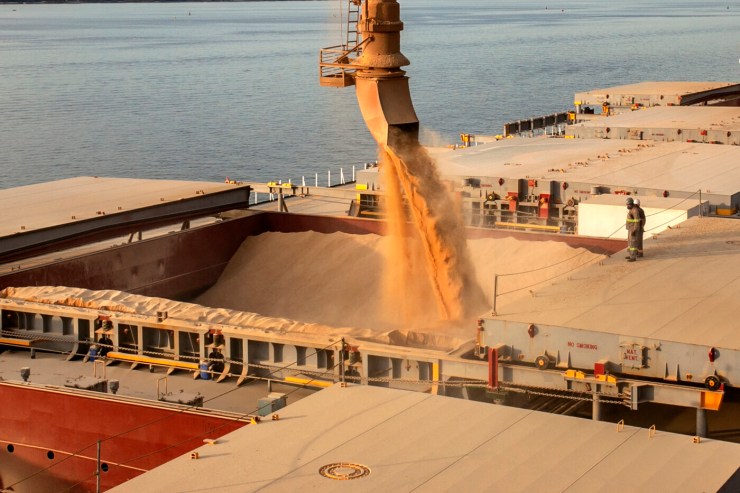
Photo: Gilson Abreu
The analysis is based on data from the Ministry of Development, Industry, Trade and Services (MDIC), which had already revealed that Brazilian exports to the United States fell 18.51% in August compared to the same month in 2024. According to Amcham, last month's data indicates that the surcharges imposed by the US caused a significant drop in Brazilian exports and are also contributing to the slowdown in imports.
Regarding non-taxable products, Amcham assesses that the 7.1% drop was influenced "primarily by market factors, such as lower US demand for oil and derivatives."
Second business partner
The United States is Brazil's second largest trading partner, second only to China. In the first eight months of the year, trade between the two countries reached US$56.6 billion. Our exports totaled US$26.6 billion, showing an increase of 1.61% compared to January-August 2024. However, the isolated result for August represented the largest monthly drop of 2025, "indicating that the tariff increase influenced business decisions," emphasizes Amcham.
Tariff
The application of tariffs of up to 50% to a large portion of Brazilian sales to the United States became known as the "tariaço" (a massive tariff increase).
 The Trump administration signed an executive order that stipulated the tariffs starting August 6, but left about 700 products on a list of exceptions. These include orange juice and pulp, fuels, ores, fertilizers, and civilian aircraft, including engines, parts, and components. Also excluded were products such as wood pulp, cellulose, precious metals, energy, and energy products.
Trump claims that Americans have a trade deficit (they buy more than they sell) with Brazil – a claim refuted by official figures from both countries.
The American president also used as justification the treatment given by Brazil to former president Jair Bolsonaro, whom he considers to be persecuted. Bolsonaro is a defendant in the Supreme Federal Court (STF) for attempted coup d'état, in a trial that entered its final stretch this week. According to the Ministry of Development, Industry, Trade and Services, the 50% tariff affects about one third (35.9%) of Brazilian exports to the United States.
US with positive balance
The data shows that, contrary to what Trump claimed, the United States sells more to Brazil than it buys from it. In August alone, this Brazilian trade deficit reached US$1.2 billion, an increase of US$1.8 billion compared to the same month last year. In the consolidated figures from January to August, the deficit totaled US$3.4 billion.
The survey by the chamber of commerce shows that, from January to July, the American deficit with the entire world is US$809.3 billion, an increase of 22.4 billion compared to the same period in 2024. But Brazil is at the other end of this equation as the fifth partner with the largest deficit in its relationship with the Americans, surpassed only by the Netherlands, Hong Kong, the United Kingdom, and the United Arab Emirates.
Imports
 According to Amcham, the impact of the tariff increase is also evident in Brazilian imports, "especially in sectors more integrated with American industry, such as coal, essential for steel production in Brazil," meaning materials that Brazilian companies buy from the United States to resell to Americans incorporated into other products.
In August, Brazilian imports rose 4.61% of the total export volume (TP4T), but at a slower pace than those recorded in July (18.11% TP4T) and June (18.81% TP4T), indicating a loss of dynamism in bilateral trade. "The sharp slowdown in the pace of Brazilian imports from the US signals an indirect effect of tariffs, reflecting the high degree of integration and intra-firm trade between the two largest economies in the Americas," assesses the president of Amcham, Abrão Neto.