 EN
 PT_BR

Brazilian soybean exports have increased through July 2026, while the international market faces pressure amid expectations of greater supply in the United States. According to data released by the National Supply Company (Conab), Brazil exported 82.9 million tons of soybeans in the accumulated period up to July, above the 77.2 million tons registered in the same period of the previous year.
Favorable conditions for the development of North American crops have raised global supply expectations and put pressure on soybean futures contracts on the Chicago Board of Trade. In Brazil, however, the increase in export premiums has limited the impact of external declines on domestic prices.
According to data released by Conab, concerns about US production also deterred buyers who had been making large-volume purchases. The Brazilian physical market became calmer, while Chinese purchases shifted to the United States.
In this scenario, the market has adjusted some of the export premiums in Brazil. This movement occurs at the same time as the situation in the Black Sea remains complex, with blockades and conflicts limiting exports from Russia and Ukraine.
Despite external pressure, Brazilian export performance remains high. According to data released by Conab, accumulated shipments up to July 2026 have increased compared to the same period of the previous year, reinforcing Brazil's participation in the international trade of oilseeds.
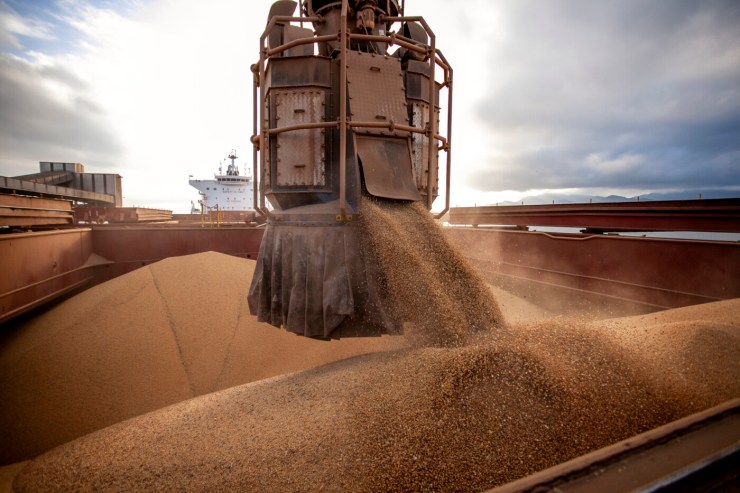
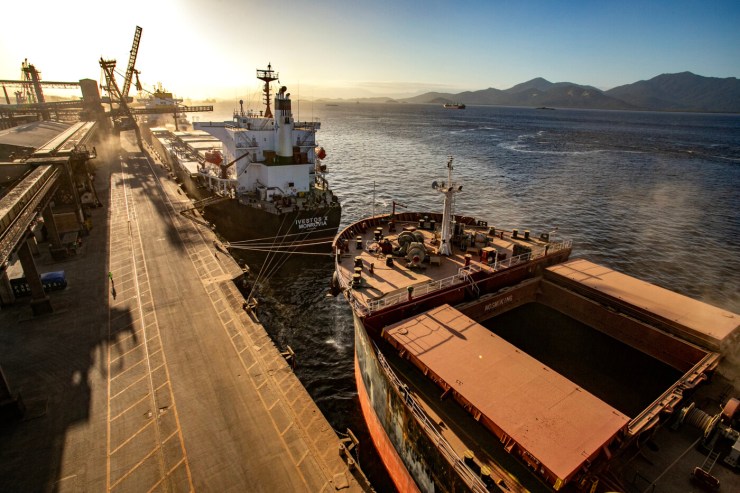
The distribution of shipments across ports also showed changes. Ports in the Northern Arc handled 38.81 TP4T of national exports, compared to 38.21 TP4T in the same period of the previous year.
Through the Port of Santos, 35.71 TP4T of the national volume was shipped, compared to 35.91 TP4T in the previous year. The Port of Paranaguá accounted for 13.11 TP4T of Brazilian soybean exports, above the 11.91 TP4T recorded in the same period of the previous year.
São Francisco do Sul, in turn, accounted for 4.9% of national shipments, compared to 5.2% in the same period of the previous year, according to data released by Conab.
The origin of the cargo destined for export was concentrated in the states of Mato Grosso, Goiás, Paraná, and Minas Gerais.
The scenario shows a market divided between the pressure exerted by expectations of greater North American supply and the support provided by export premiums in Brazil. At the same time, activity at the main ports keeps Brazilian shipments at a higher level than observed in the previous year.
For producers and market players, the behavior of the Chicago Board of Trade, Chinese demand, and the formation of export premiums remain important factors in monitoring the evolution of soybean prices in Brazil.