 EN
EN  PT_BR
PT_BR The publication of Complementary Law 224/2025The measure, which promoted a linear cut of 10% in federal tax benefits affecting different links in the agribusiness sector, is expected to increase costs throughout the milk, coffee, wheat, and soy supply chains. The expectation is that this will be passed on gradually to the final consumer and that the debate on the cumulative nature of taxes, which until now operated under a non-cumulative logic, will be reopened.

Photo: Gilson Abreu/AEN
According to tax lawyer Cintia Meyer, the new system tends to generate a ripple effect. By reducing presumed credits and altering incentives, the measure increases the tax burden in segments that are already facing margin compression, pressured by high production costs and depressed international commodity prices.
The Tax Expenditure Statement (DGT), which is part of the Annual Budget Law, lists approximately 300 instances of tax benefits, in addition to another 14 specifically addressed in... Complementary Law 224/2025According to Meyer, companies that use any of these mechanisms will need to review their tax structures. "If the company relies on any of these benefits, the impact can be direct on the bottom line," he says.
Since the regulation was enacted in December, its effects have already reached Corporate Income Tax (IRPJ) and Import Tax since January 1st, in accordance with the principle of prior notice. For PIS, Cofins, IPI, CPS, and CSLL, the new rules will come into effect from April 1st, extending the measure's reach throughout the first half of the year.
Milk faces cuts in tax credits and new taxation on dairy products.

Photo: Fernando Dias
In the dairy supply chain, the Complementary Law 224/2025 This directly reduces the presumed credits granted to the industry. For dairy companies in general, the percentage drops from 1.85% to 1.67%. For companies enrolled in the "Mais Leite Saudável" (More Healthy Milk) Program, the credit decreases from 4.63% to 4.17%. Although this benefit is conditional on investments being made, the legal text does not specify whether this mechanism could be an exception to the linear cut, which increases legal uncertainty in the sector.
In a question-and-answer document, the Federal Revenue Service stated that the application of the benefit should be analyzed "on a case-by-case basis," according to the execution of the projects approved in the program, leaving room for different interpretations and potential administrative or judicial challenges.
In domestic consumption, products that are part of the basic food basket remain taxed at zero. However, relevant items in the dairy portfolio, such as fluid milk, whey, fermented milk, and dairy beverages, will now be taxed at 0.925% of PIS/Cofins, increasing costs throughout the chain and putting pressure on industry margins. Exports, by virtue of constitutional immunity, remain exempt from taxation.
Coffee exports face reduction in presumed credit.

Photo: Courtesy of the Government of Bahia
In the coffee supply chain, the roasting industry maintains a zero tax rate on domestic sales, as it is a product included in the basic food basket. The change occurs in export operations. With the Complementary Law 224/2025There was a reduction in presumed credits linked to foreign sales.
For raw coffee, the presumed credit on the acquisition of inputs decreases from 7.4% to 6.66%. For roasted or soluble coffee, the percentage calculated on export revenue falls from 0.925% to 0.8325%. This decrease reduces the margins of exporting companies and alters the cost structure in a segment highly dependent on the international market.
Wheat concentrates the most noticeable effects of the change.
In the wheat supply chain, the effects are distinct and considered more sensitive. According to the tax expert, the main change affects the acquisition of grain destined for flour production. “The operation, which was previously subject to a zero tax rate, will now be taxed without the buyer being entitled to a tax credit. In practice, this is a non-recoverable tax, directly incorporated into the acquisition cost,” explains Cintia.
Since flour is a basic ingredient in bread making, the impact tends to spread throughout the supply chain, increasing the cost of the final product and putting pressure on the consumer price.

Photo: Cleverson Beje
In addition to taxation on the purchase of the grain, the Complementary Law 224/2025 It also reduced the presumed credit from 3.24% to 2.92% for wheat. "Domestic sales remain unchanged for products included in the basic food basket, such as wheat flour and bread premixes, which continue with a zero tax rate. Items outside this category, such as cake premixes, maintain the previously applied taxation," explains Cintia.
According to tax lawyer Luiz Eduardo Costa Lucas, the change creates a distortion in the system. He argues that this is a case where a product that previously operated with a zero tax rate now generates tax liability midway through the supply chain, without the possibility of credit. "In practice, the tax collected is not recoverable, it becomes part of the cost, and it reopens the discussion about non-cumulative taxation, a topic debated since 2004. The result is the transfer of the burden to the final consumer," he points out.
Corn has reduced presumed credit throughout the supply chain.

Photo: Fernando Dias/Ascom Seapi
A similar structure was adopted in the corn supply chain. Although inputs were not directly affected, the presumed credit on purchases from individuals was reduced from 3.24% to 2.92%. In corn oil, both domestic sales and exports saw a decrease in the presumed credit, from 2.498% to 2.248, increasing pressure on the sector's margins.
Soybean oil loses tax breaks and credit is reduced.
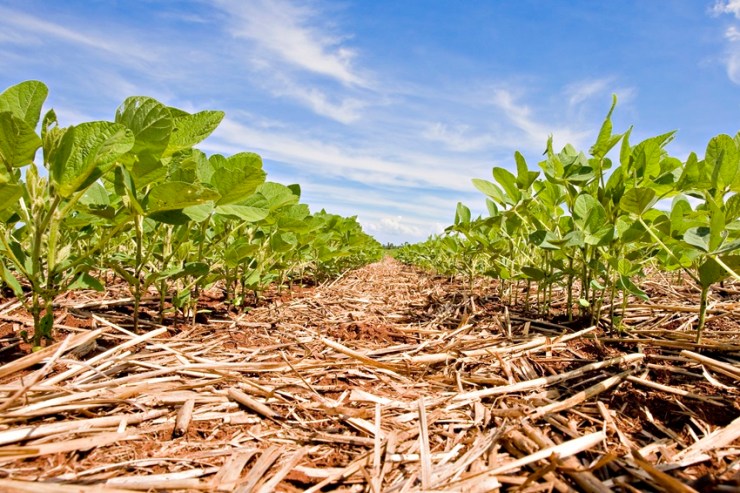
In the soybean supply chain, the acquisition of inputs remains unchanged. The change occurs at the commercialization stage. Soybean oil, currently classified as a basic food item and subject to a zero PIS/Cofins tax rate, but not included in the list provided for in the tax reform, will now be subject to 0.925% of these taxes.
Furthermore, the presumed credit on sales of soybean meal, oil, and residues was reduced by 10%, falling from 2.498% to 2.248%, which compresses margins throughout the chain.
Fertilizers will now be subject to both import and export taxes.

Photo: Claudio Neves
A broader impact is observed in the fertilizer industry. Agricultural inputs that previously operated with a zero PIS/Cofins tax rate will now be taxed at 0.925%. The same percentage will apply to domestic sales of fertilizers, pesticides, seeds, seedlings, and soil amendments, which were also previously exempt.
According to Cintia, the effect is cumulative. “The segment will be taxed on acquisition, without the right to credit, and also on sale. In the case of imports, the fertilizer industry will have to collect PIS and Cofins without the possibility of compensation,” says the tax expert.
In practice, this is an additional cost incorporated into price formation, with the potential for a direct impact on rural producers and, ultimately, on the consumer.
Legal uncertainty increases the risk of cumulativeness and litigation.
Given the absence of an explicit list of which benefits were actually achieved by Complementary Law 224/2025Cintia recommends a careful case-by-case analysis. According to her, it is necessary to verify if the tax involved is among those covered by the regulation, such as PIS, PIS-Importation, Cofins, Cofins-Importation, Import Tax (II), IPI, IRPJ, CSLL and CPP.
Furthermore, the benefit must be included in the Tax Expenditure Statement of the Annual Budget Law (LOA), qualify as a tax incentive, and not be a specific legal exception.

Source: Martinelli Lawyers
According to Cintia, the criteria mentioned do not exhaust all possible classifications, and the interpretation will depend, to a large extent, on the understanding adopted by the Federal Revenue Service, an aspect that is not detailed in the... Complementary Law 224/2025"There are situations that, in theory, don't fit the criteria, but the tax authorities may interpret them differently, which can lead to broad discussions and even litigation," the lawyer mentions.
In turn, Costa Lucas observes that, until the end of last year, there was no practical concern in differentiating, from the government's perspective, what would constitute a tax benefit and what would constitute a tax expenditure. Annually, the Revenue Service submits the list of expenditures, but the new rule raises the question of whether all listed items can be automatically classified as benefits. "Not everything that is there is necessarily a benefit," he points out.

Photo: Courtesy of the Government of Bahia
According to him, it is essential to verify whether the item is included in the Annual Budget Law (LOA) and, furthermore, whether it effectively qualifies as a tax incentive. Since there is no clear legal definition of this classification, a zone of uncertainty is created. Costa Lucas points out that the debate about the nature of these line items was dormant and is now back at the center of the discussion. In his assessment, the linear reduction could affect basic mechanisms of the system, reintroducing cumulativeness, especially in agribusiness chains.
Ultimately, the impact tends to reach the consumer. This is because retailers will start acquiring products that have been taxed throughout the supply chain without the possibility of credit. Since the tax is calculated 'internally', the cost is incorporated into the price. In practice, according to the tax expert, a model conceived as non-cumulative begins to operate with cumulative effects, putting pressure on the final value paid by the consumer.