 EN
EN  PT_BR
PT_BR 
Sesame is increasingly gaining ground as a secondary crop in Brazil, especially in the state of Mato Grosso, which is currently responsible for 651% of all sesame produced in the country.
According to data from Conab, 401,000 hectares were planted in Mato Grosso in the 2024/25 harvest, with a production of 720,000 tons. However, a recent survey conducted by Famato (Federation of Agriculture and Livestock of Mato Grosso) indicated that the actual cultivated area in the state in 24/25 was more than 704,000 hectares.
“We questioned these Conab data because when we looked at the export figures, they didn't match the production figures. We conducted a specific survey that indicated a much larger area than what was reported by Conab, and now we will include sesame in our monthly surveys,” highlights Cleiton Gauer, superintendent of Imea.
Gauer therefore states that the area cultivated with the grain in the state has increased by more than 250% in the last five years, consolidating the importance of sesame and the leading role of Mato Grosso in this market. Proof of this is the municipality of Canarara, which cultivates 18% of the state's area and is recognized as the "World Capital of Sesame".
"This growth came from increasing demand and the market recognizing Mato Grosso's potential to expand production and meet this international need," Gauer assesses.
To further foster this growth, the state government is also working to stimulate the sector, as highlighted by the Secretary of Development of Mato Grosso, Mayran Beckman. “We are creating a thematic sectoral chamber for beans and pulses in the state, in addition to supporting the organization of technical events for the dissemination of knowledge. This is a commitment of the state: to create a favorable environment for the development of these crops.”
INTERNATIONAL MARKET
Almost all of this production is destined for the international market, since 99% of Mato Grosso's sesame production is sent for export, as pointed out by Mirael Praeiro, President of Invest in Mato Grosso.
"Mato Grosso is the largest national producer of sesame, has the world capital of the crop in Canarana, and produces with great sustainability. Since 2020 we have been prospecting international clients and from 2024, with the opening of the Chinese market to Brazilian sesame, shipments are growing year by year," he reports.
The official database of Secex (Secretariat of Foreign Trade) aggregates exports of oilseeds such as sunflower, sesame, canola, cotton, and others. Federal government figures indicate that, in the 2024/25 season, Brazil exported 595,500 tons of these products (an increase of 75.91 TP4T compared to the previous harvest).
More than 72% of this volume originated from Mato Grosso, while the largest buyers were China (32.1%), India (19.8%), Turkey (8.4%) and Saudi Arabia (7.2%).
Already in 2026, the consolidated figures from January to March show 121.7 million tons already shipped, with 46.9% coming from Mato Grosso and market share from the Netherlands (22.8%), Turkey (17.3%), India (16.8%) and China (13.4%).
Strengthening this international market also depends on the active work of ApexBrasil (Brazilian Trade and Investment Promotion Agency) through Brazil's participation in trade fairs in other countries and in welcoming international buyers to the country.
According to Invest Mato Grosso, the 2026 edition of Gulfood in Dubai alone generated over US$101 million in business for the state of Mato Grosso.
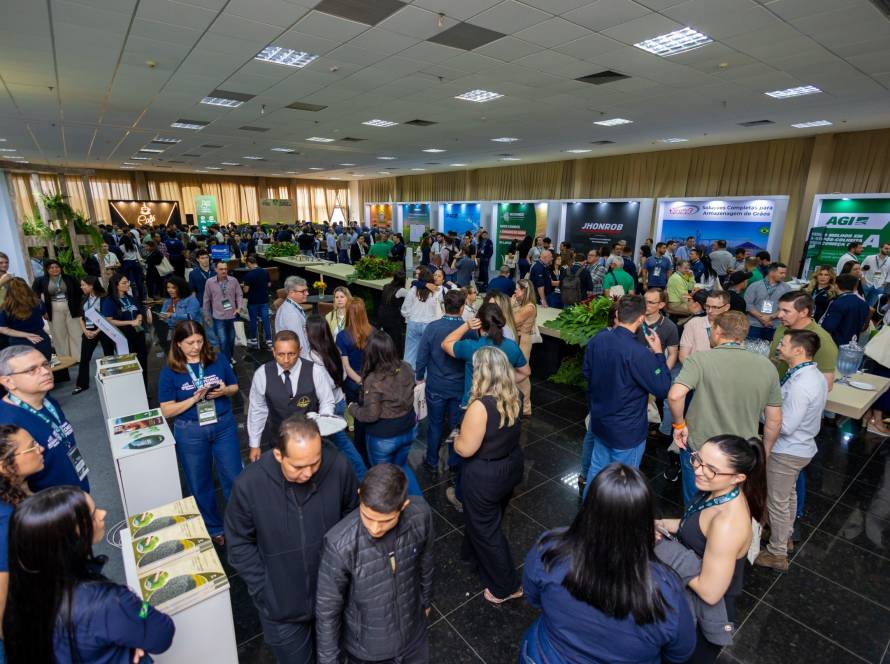
On the other hand, ApexBrasil promoted an agenda with 13 buyers representing 7 different countries, such as the Netherlands, Russia, China, India, Paraguay, and South Africa, who came to Mato Grosso to participate in the Brazil Superfoods Summit held in Cuiabá.
“We took international buyers for two days of visits to farms in the Sorriso region, so they could see our production firsthand. After their participation in the event, which discusses several important topics for the supply chain, we will promote some business rounds to connect Brazilian companies and producers directly with these buyers,” says Pedro Neto, regional representative of ApexBrasil.
“Another part of this effort was strengthening the Brazilian offices in India and China, which are also directly involved in these contacts and in opening new market opportunities,” adds Neto.