 EN
EN  PT_BR
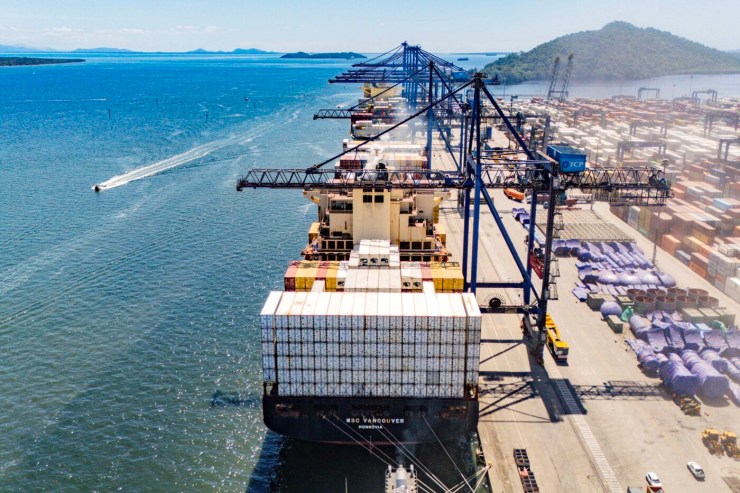
PT_BR Corn emerges as the main driver of Paraná's exports, registering a 179% increase in volume shipped to the foreign market from January to October 2025, compared to the same period in 2024. This year, Paraná shipped 3.55 million tons of the cereal in the first ten months, while in 2024 it was 1.27 million tons.

Photo: Claudio Neves/Ports of Paraná
Revenue generated in 2025 was US$757.7 million, almost three times more than in 2024, when that figure was US$268.2 million. This significant revenue was also boosted by a slight increase in the international price, which rose from US$210.58 to US$213.43 per ton.
The data is from the latest Economic Bulletin of the Department of Rural Economy (Deral), from the Paraná State Department of Agriculture and Supply (Seab). The document points out that this surge occurred due to the large volume exported as a result of the record harvest of the previous cycle.
Furthermore, this results from the strategy adopted by producers of exporting corn first, since it is less commercially attractive than soybeans. According to analysts at Deral, this demonstrates a dynamic agribusiness sector, where the growth in exports signals the importance of global markets for balancing domestic supply chains.
Soy and honey
The Deral Bulletin also addresses the productive diversity of Paraná and the robust performance of sectors such as swine, beef, and honey, which reinforce the resilience of the countryside in the face of climatic, tariff, and global demand fluctuations.
While corn is sustaining export growth, soybeans are facing a period of adjustment, with a 10% reduction in shipments of the complex (meal, oil, and grains). Exports in the first 10 months of the year totaled 13.56 million tons, resulting in financial revenue of US$5.53 billion.
Even so, some segments registered positive evolution: soybean oil, with higher added value, saw an increase of 18% in

Photo: Claudio Neves/Ports of Paraná
Exports increased, and soybean meal grew by 21% in four-month periods. The decline is concentrated in soybeans, with a contraction of 15% in four-month periods.
Adding together soybean and corn exports, Paraná exported 17.1 million tons between January and October 2025, representing an increase of 4.11 TP4T. According to Deral technicians, this shows that, even with the drop in soybean volume, bulk shipments increased due to the prioritization of corn. The expectation is that in the next three months there will be a greater shipment of soybeans to free up warehouses, as the harvest of the new crop begins in January.
Brazilian honey is among the products most impacted by the international scenario. National exports grew 1.51% in volume and 31.21% in revenue through October, but the increase was marked by strong volatility after the United States imposed a 50% tariff on several Brazilian products, including honey.
Paraná remains the third largest exporter, with 5,570 tons and US$18.6 million, almost double the revenue of the previous year. The anticipation of purchases by the US, followed by a drop in volumes after August, highlights the immediate effects of the new tariff, but the appreciation of Brazilian honey prices has mitigated some of the financial losses. Along with the US, the main importers of Brazilian honey are Canada, the United Kingdom, Germany, and the Netherlands.

Photo: Jonathan Campos/AEN
Chicken
Among animal proteins, chicken shows partial relief in costs. In October, the cost of production in Paraná fell to R$ 4.55/kg, a reduction of 1.7% compared to the previous month and 2.8% compared to October 2024. This was mainly influenced by the drop in feed costs – which represents 63% of production costs. The Chicken Production Cost Index also shows an accumulated decrease of 4.9% for the year, helping to balance the activity amidst the fluctuation of prices paid to producers.
Cattle
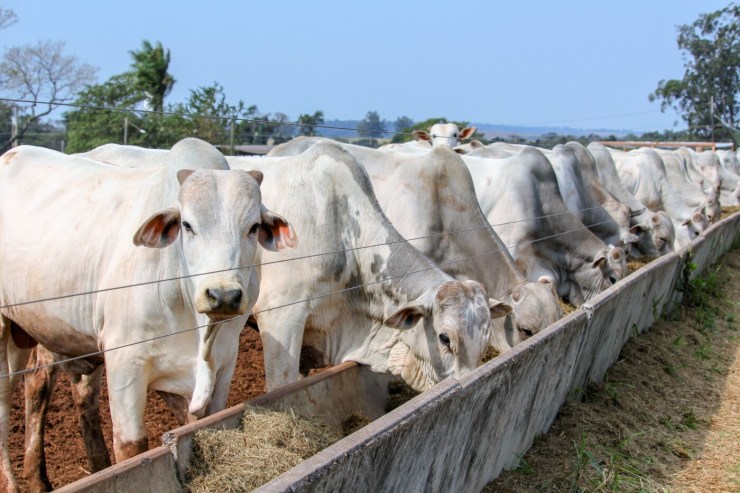
In the cattle industry, the external scenario remains decisive. Brazilian beef exports have already reached 96% of the total shipped in 2024, a pace that keeps the domestic market with a balanced supply and firm prices, despite signs of resistance from buyers. Shipments of live animals abroad also grew, totaling 842,000 tons in the year, an increase of 12.4% compared to 2024.
Pigs
Pig farming, in turn, is experiencing a historic cycle. In the third quarter, the country recorded simultaneous records in production, exports,

Photo: Disclosure/AEN
Imports and domestic availability. 1.49 million tons of pork were produced, an increase of 6.1% compared to 2024. Exports totaled 391,970 tons, representing 26.3% of national production, and also reached a record volume.
Mushrooms
In the mushroom segment, Paraná maintains its third national position, with a production of 982,000 kilos in 2024 and a VBP (Value of Production) exceeding R$ (Rate of Production of 21 million). The main crops are edible mushrooms such as Champignon de Paris, Shiitake, and Shimeji. The activity, still concentrated among small and medium-sized producers, is growing, driven by increased demand for healthy foods, oriental cuisine, and alternative proteins.
According to Seab/Deral, the largest production centers are located in the regions of Curitiba, Guarapuava, Irati, Ponta Grossa, Londrina, União da Vitória, Umuarama, Dois Vizinhos, Cornélio Procópio, and Maringá.
Mushrooms are also cultivated in Paraná. Agaricus blazei, known as "Champignon of Brazil" and "sun mushroom," among other names. According to the National Association of Mushroom Producers (ANPC), it is appreciated worldwide for its gastronomic qualities and medicinal properties.
Cassava
In the field, cassava production maintains a favorable trajectory in 2025. The November rains boosted crop development and accelerated the so-called "uprooting," reducing delays caused by the drier period recorded between August and October. Production is expected to reach a new record, estimated at 4.2 million tons, above the 3.7 million tons of last year.
The prices paid to producers in October, close to R$ 543.57 per ton, represent a recovery compared to September and guarantee coverage of operational costs, encouraging producers and stimulating an increase in planted area for 2026.
Vegetables
The productive diversity of vegetables remains one of Paraná's hallmarks. In 2024, all 399 municipalities registered commercial crops, generating R$7.1 billion in Gross Production Value (VBP). São José dos Pinhais, Guarapuava, Marilândia do Sul, Contenda, and Araucária lead the segment, totaling 805,600 tons harvested and R$1.8 billion in VBP. Production mainly includes potatoes, onions, cabbage, and cauliflower, as well as a wide range of leafy greens, sustained by demand from major urban centers.