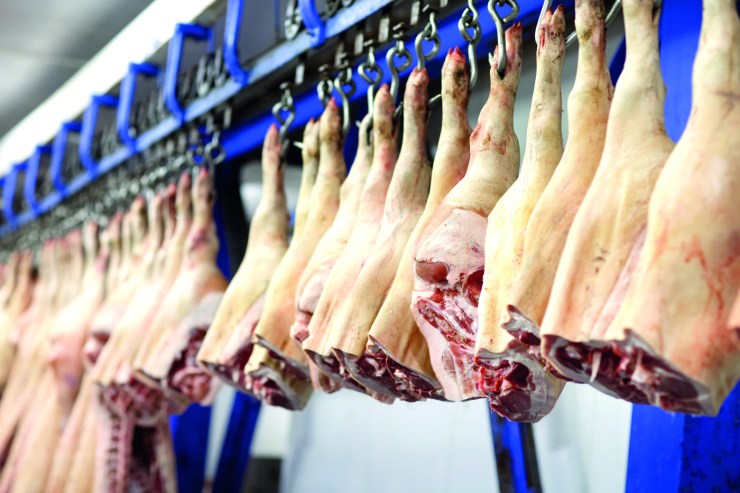
The performance of Brazilian beef exports in early 2026 indicates a significant recovery in external demand, with simultaneous growth in volume and revenue and greater market diversification. Although China remains the main destination, faster growth in countries such as the United States, the European Union, Chile, and Russia has marginally reduced dependence on the Chinese market.

Photo: Shutterstock
This movement occurs in a context of uncertainty regarding the safeguards adopted by China, but data from the first two months suggest a limited impact so far. Part of this compensation comes from the United States, which faces a structural supply deficit. The United States Department of Agriculture (USDA) estimates a need for imports of 2.5 million tons in 2026, which keeps the country as one of the main drivers of demand for Brazilian beef.
In addition to the major buyers, medium-sized markets also consistently increased their purchases. Chile, Russia, Egypt, the United Arab Emirates, Mexico, and Saudi Arabia registered significant growth in imports during the period, reinforcing the geographic dispersion of Brazilian sales.
In the case of the Middle East, there is an additional risk factor linked to the geopolitical scenario. The escalation of conflict in the region could put pressure on logistical costs and affect trade flows. Even so, the relative weight of this market in Brazilian exports limits the potential impact. In 2025, the region accounted for 6.65% of beef revenue, around US$1.22 billion, a share that rose to 8.5% in the first two months of 2026, reaching US$244 million, indicating relevance but not centrality in the export agenda.
Livestock cycle
The growth in exports is occurring in parallel with a shift in the Brazilian livestock cycle. The increased value of replacement animals and the reduction in female slaughter indicate a trend of animal retention in the field, which tends to limit the supply of beef throughout 2026, precisely at a time of strong external demand.
At the same time, there is the prospect of expanding markets. Countries such as Vietnam, Indonesia, Japan, and South Korea are on the sector's radar, whether for consolidating sales or opening new ones.

Photo: Shutterstock
effective, which could strengthen international demand for Brazilian protein.
In this context, even in a scenario where the export quota to China exempt from the 55% tariff is exhausted, the trend is for sustained demand for animals. The combination of higher demand in different markets and restricted domestic supply should keep the market firm throughout the year.
Demand for beef
Data from the Brazilian Association of Meat Processing Plants (Abrafrigo), based on information from the Secretariat of Foreign Trade, linked to the Ministry of Development, Industry, Trade and Services (Secex), for the first two months of the year, confirms this trend. Between January and February, beef exports, including fresh, processed and offal products, totaled US$2.865 billion, an increase of 39% compared to the same period in 2025, when revenue was US$2.065 billion. In volume, 557,240 tons were shipped, an increase of 22% over the 455,970 tons of the previous year.
Considering only the month of February 2026, exports reached US$1.449 billion, a growth of 39.57% compared to the US$1.038 billion recorded in February 2025. The volume shipped in the month reached 279,260 tons, an increase of 28.64% compared to the 217,080 tons of the same month last year.

Photo: Shutterstock
Destination of Brazilian beef
China remains the main destination for Brazilian beef in the first two months of the year, registering growth of 361% compared to the same period of the previous year, reaching US$1.221 billion, with shipments of 223,700 tons (+21.7% of the total export volume). The Chinese share of total exports decreased to 42.6% of the total export volume in the first two months of 2026, compared to 43.4% of the same period in 2025. When considering only sales of fresh beef, the Chinese share was 46.5% of the total export volume in the first two months of 2026, compared to 48.6% of the total export volume in the first two months of 2025, highlighting the relative growth of other markets. Average export prices for fresh beef to China increased by 12% in the first two months of 2026, compared to the first two months of the previous year, reaching US$5,461 per ton.
Sales of fresh beef to the United States, the second largest foreign buyer, grew by 97.3% in the first two months of 2026, to US$379 million, while the volume shipped increased by 60%, to 63,080 tons.
In total, sales of beef and beef by-products to the United States reached US$448.7 million in the first two months of the year (+56.8%). Average export prices for fresh beef to the United States increased by 23.4% in the first two months of 2026, compared to the first two months of the previous year, to US$6,015 per ton.
Other markets
The European Union is another market that continues to grow steadily and with favorable prospects after the approval of the Trade Agreement with Mercosur. In the first two months of 2026, sales of
Photo: Shutterstock
Exports of fresh beef to the European Union increased by 24.61% in revenue, reaching US$121.4 million, and by 18.8% in volume, reaching 14,170 tons. Average export prices for fresh beef to the European Union increased by 4.85% in the first two months of 2026, compared to the same period of the previous year, reaching US$8,568 per ton.
In South America, Chile maintained a solid performance, with growth of 22.41% in imported volume, reaching 23,609 tons, while the value of purchases advanced 29.3%, totaling approximately US$135.9 million.
Russia, in turn, showed one of the most significant expansions among the top 20 buyers, rising to fifth position. Beef imports from Brazil grew by 106.6% in volume, reaching 23,349 tons, while the value of purchases increased by 132.3%, to approximately US$102.6 million, reflecting the strengthening of the Brazilian presence in that market.
Data from the first two months of 2026 point to a scenario of expansion in Brazilian beef exports, driven mainly by Asia, the Middle East, and emerging markets, while some specific destinations showed adjustments or occasional contractions. The result reinforces Brazil's role as one of the main global suppliers of beef protein in a context of still strong international demand. In total, 109 countries increased their imports, while another 42 reduced their purchases.

 EN
EN  PT_BR
PT_BR