 EN
EN  PT_BR
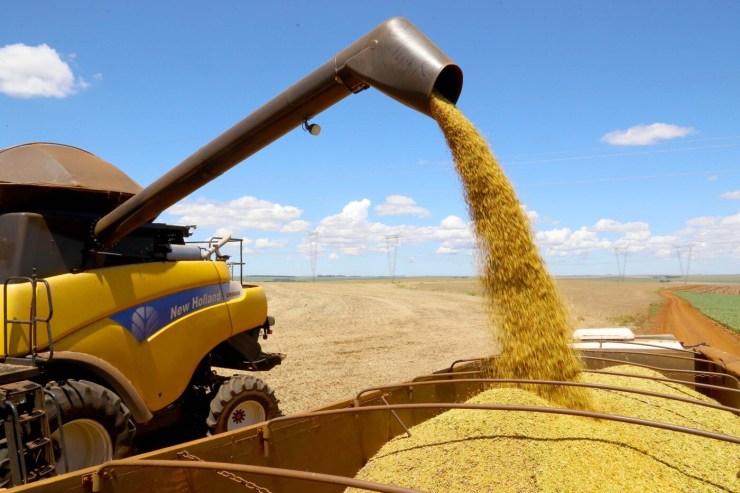
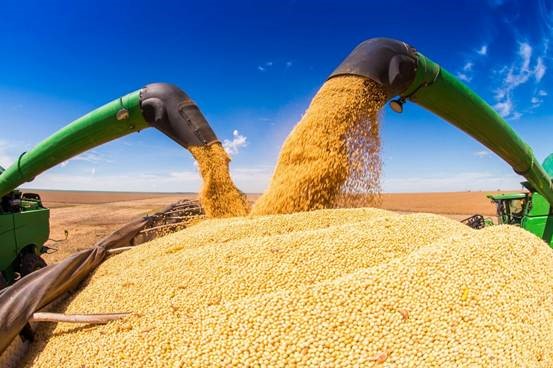
PT_BR Agribusiness remains one of the main drivers of income, employment, and foreign exchange in Brazil. At the heart of this engine are soybeans and corn, with Mato Grosso consolidated as the national leader in the production of both commodities. According to representatives of the sector, this performance projects the state to a level of international relevance comparable to that of major exporting countries. "If we look only at the state of Mato Grosso, if it were a country today, in soybean and corn production, it would be the third largest in the world. So, by itself, it already has a gigantic economic impact on the world economy. When we bring this to Brazil, we place Mato Grosso in the leadership of agricultural production in our country," says Nathan Belusso, financial director of the Mato Grosso Soybean and Corn Producers Association.

Photo: Disclosure
The relevance of the State is part of a broader context of the expansion of Brazilian agribusiness. Data from the Center for Advanced Studies in Applied Economics, of the Luiz de Queiroz Higher School of Agriculture, in partnership with the Confederation of Agriculture and Livestock of Brazil, indicate that the sector employed more than 28.58 million people in the last quarter of 2025, an increase of 21% compared to the same period of 2024.
Infrastructure limits potential.
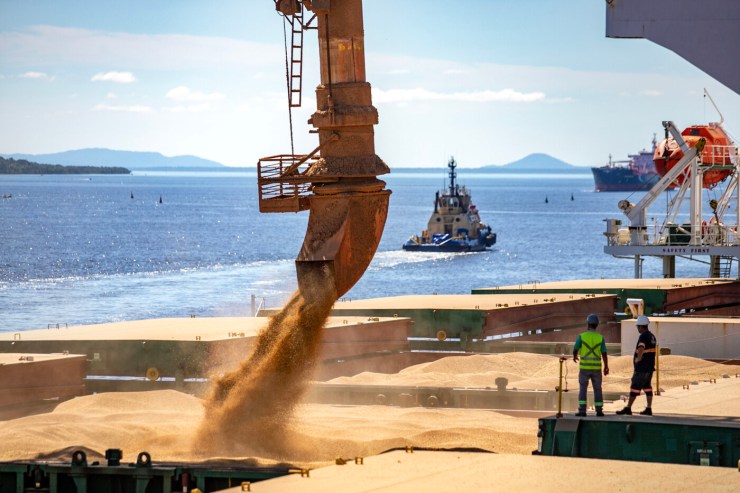
Despite the growth, producers and sector leaders acknowledge that the increase in production exposes historical weaknesses, especially in logistics. Highways, railways, and storage facilities are still considered insufficient to keep pace with the harvests. "The agricultural sector in Mato Grosso still lacks significant investment in basic infrastructure. This contributes not only to production and to the Brazilian and Mato Grosso GDP, but also to socioeconomic growth and income distribution for all residents," says Belusso.
According to him, the expansion of the productive base demands a proportional response from the public authorities and society. "The population has to

Photo: Claudio Neves
"Wearing the shirt of agribusiness, a sector that truly makes our country proud," he emphasizes.
The assessment is that the resources generated by the activity return in the form of local investments, even if the pace does not keep up with the expansion of the volume produced. Inland municipalities, previously with low economic density, began to register growth after the consolidation of the crops.
Internalization of development
In the eastern part of the state, cities like Canarana and Água Boa are cited as examples of economic transformation associated with agribusiness. “Agribusiness has a positive impact on municipalities' finances and quality of life. Just do historical research and compare municipalities that didn't have agribusiness with those where soybeans later arrived. It's easy to see the total impact on income, the municipality's GDP, and the citizens' quality of life. The impact is visible,” says Murilo Ramos, delegate of the Canarana district.

Photo: Antonio Neto
According to representatives of Aprosoja MT, the dynamics extend beyond the farm gate. It involves supply chains, services, commerce, and urban infrastructure. “When you talk about agribusiness, Mato Grosso immediately comes to mind. By fighting for improvements in the laws and against abuses suffered by the sector, we ensure that the association is respected and contributes to making Mato Grosso increasingly larger in production and in the well-being of society,” emphasizes the Vice-President of Aprosoja-MT for the North region, Diogo Balistieri.
The challenge, according to producers, is to sustain global leadership amidst the need to expand logistical investments and ensure legal security. Maintaining leadership will depend less on expanding area and more on efficiency in the integration between production, transportation, and consumer markets.