 EN
EN  PT_BR
PT_BR Just days before Expodireto Cotrijal, which takes place from March 9th to 13th in Não-Me-Toque (RS), soybean producers in Rio Grande do Sul are facing increased pressure from stink bugs in their crops. The combination of irregular rainfall throughout the summer and an increase in the population of these insects has reduced the safety margin precisely at the stage when the crop's productive potential is practically defined.
With less regular water supply, sucking insects found favorable conditions to multiply. The effects appear mainly during grain formation and filling. “The stink bug has always been present in the Rio Grande do Sul production system. What changes in a year like this is that the plant loses its ability to compensate, representing a real loss of yield,” says agronomist Rodrigo Rodrigues.

Photo: Mateus Dias/Aprosoja MT
In addition to the brown stink bug, which is traditional in the state's crops, the green-bellied stink bug has been increasing its presence in soybean fields in recent harvests. The simultaneous occurrence of both species makes control more complex, especially in a production system with shorter intervals between crops. With fewer periods without planting, the pests find food throughout practically the entire year, which favors their survival and migration between areas.
In areas where soybeans are grown after corn, the pressure can be greater. Part of the stink bug population migrates from the previous crop or from neighboring soybean areas in a more advanced stage. “When the crop follows corn, the insect already arrives with an established population. If monitoring fails at this point, intervention becomes more difficult and more costly,” explains Rodrigues.
The damage caused by stink bugs is not limited to reduced productivity. An infestation can cause pod abortion, incomplete grain filling, and reduced grain weight. In areas intended for seed production, the damage also affects vigor and germination, compromising the commercial value of the batch.
Field monitoring
Given this scenario, experts highlight the importance of crop monitoring. Since water scarcity has altered the pace of fungicide applications this season, stink bug control should be based on the density of insects observed in the field, and not just on the application schedule. “The result depends on intervention at the right time. The sooner the population is contained, the greater the efficiency and the lower the risk of damage,” says Rodrigues.

Photo: Courtesy of the Government of Bahia
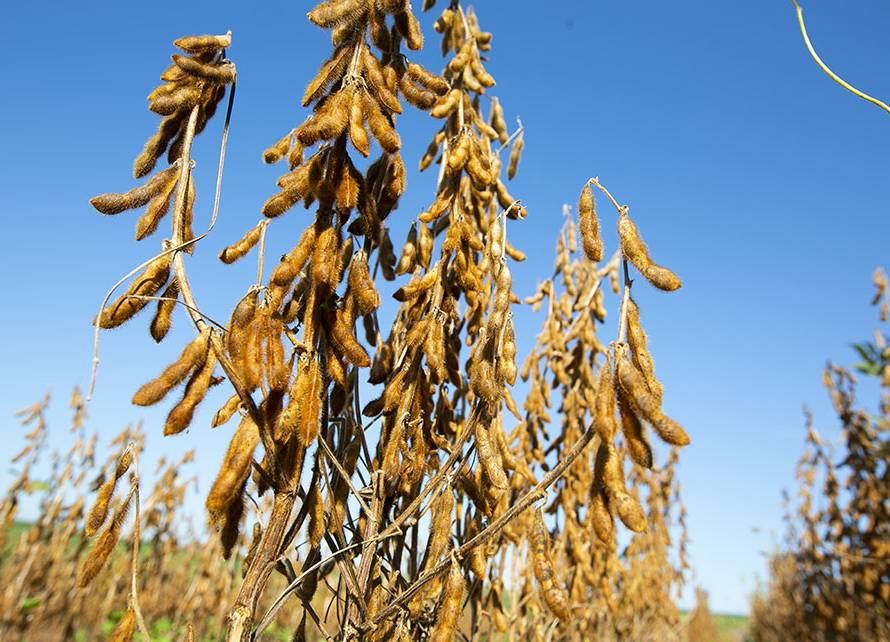
In the final stages of the soybean cycle, the plant's own structure can make control difficult. With greater leaf mass and denser crops, the interior of the plant becomes less accessible to spray droplets, while stink bugs remain protected in their lower parts. "Today the challenge is not to apply more, but to apply better. If the product doesn't reach the insect in adequate concentration, the effect in the field simply isn't confirmed," emphasizes the agronomist.
According to Rodrigues, in a harvest marked by less predictable weather and greater pest pressure, the efficiency of interventions has a direct impact on the economic return of production.