 EN
EN  PT_BR
PT_BR The Mato Grosso Institute of Agricultural Economics confirmed that 100% of the area planned for the second corn crop has been sown in the state, consolidating Mato Grosso as the main national reference in cereal production. The estimate is 7.4 million hectares cultivated, an area close to that recorded in the previous cycle.
The planting pace followed the historical average, favored by good soil moisture and the progress of the soybean harvest, which freed up areas for machinery. Despite this, there were regional differences in the schedule.
According to agronomist Bruno Casati, the heavier rains recorded in February caused some adjustments to the schedule, especially in the south and west of the state. “Some regions were impacted by heavier rains during February, mainly in the south and west of the state. This ended up shifting the planting calendar a bit, but it doesn't change the size of the cultivated area,” he points out.
Productive concentration in the Mid-North region

Agronomist Bruno Casati: "Corn cultivation is becoming increasingly established in Mato Grosso" – Photo: Press Release
Most of the planting occurred within the ideal window, especially in the more traditional agricultural regions of Mato Grosso. The Mid-North region remains the main production hub, concentrating about half of the state's corn area along the BR-163 highway, which cuts through municipalities such as Sorriso, Lucas do Rio Verde, Nova Mutum, and Sinop. “About half of Mato Grosso's corn area is concentrated along the BR-163 highway. This region usually starts planting earlier. Therefore, even when there is some delay in the soybean harvest, it is still possible to recover the overall pace of the second-crop planting,” explains Casati.
Soybean-corn system
Even with high costs and narrower margins, the planted area shows a slight increase compared to the previous cycle. For Casati, this is linked to the strategic role of corn within the predominant production system in the state, based on soybean-corn succession. “Today, farmers view their property as a system. Soybeans and corn work together to make the farm profitable. When one crop has lower margins, the other helps to balance the year's results. This year, corn is playing this role of reducing crop year losses,” he states.
Industrial demand

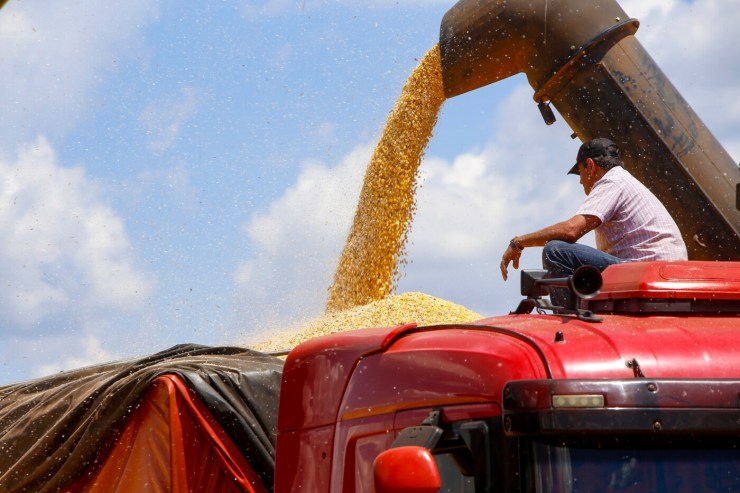
Photo: Roberto Dziura Jr.
Another factor supporting the presence of corn in Mato Grosso's fields is the expansion of domestic demand, especially with the growth of corn ethanol plants in the state. "Corn cultivation is becoming increasingly consolidated in Mato Grosso. Producers in the state have the technology and production infrastructure from the farm gate inwards, and the domestic market is growing and absorbing part of this volume, so even in less favorable periods, farmers continue to invest," he says.
The average productivity projected by IMEA is 116 sacks per hectare. The final result, however, still depends on weather conditions in the coming weeks. "I believe that if the weather remains within an average range in the coming weeks, the trend is that this productivity will be revised upwards," Casati points out.